Tellurium Q Silver III Series Cables
TELLURIUM Q SILVER III SERIES CABLES REVIEW
Tellurium Q Silver III series cables include RCA and XLR interconnects, speaker cables, jumpers, USB cables,and power cables. In this review, Janine Elliot takes a listen to the speaker cables and interconnects.
Reviewing Tellurium Q cables is never easy for me in terms of technical details, as Geoff Merrigan is very secretive about the magic in his cables. As he tells me, saying too much will only benefit his competitors. It does, however, give me a blank canvas to just listen and not be influenced in my findings due to words like “silver”, “copper” or perhaps “kryptonite”.
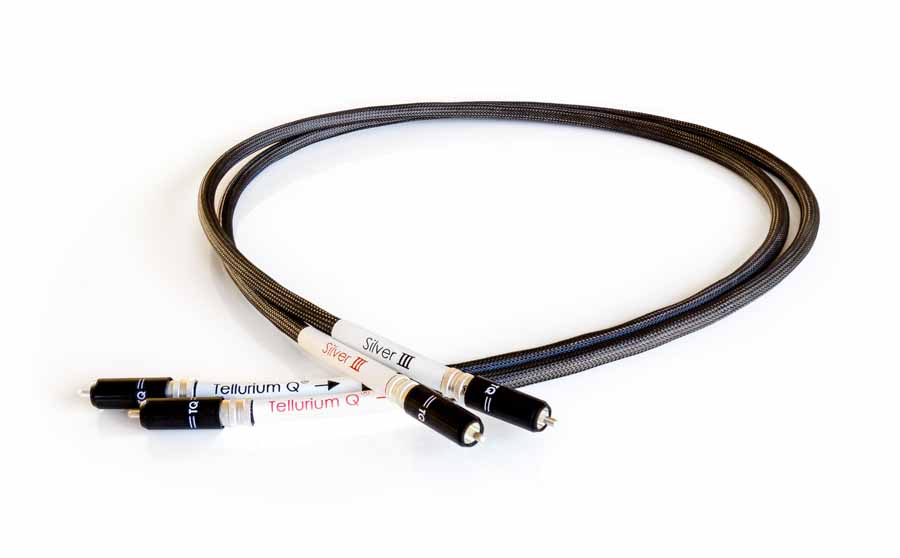
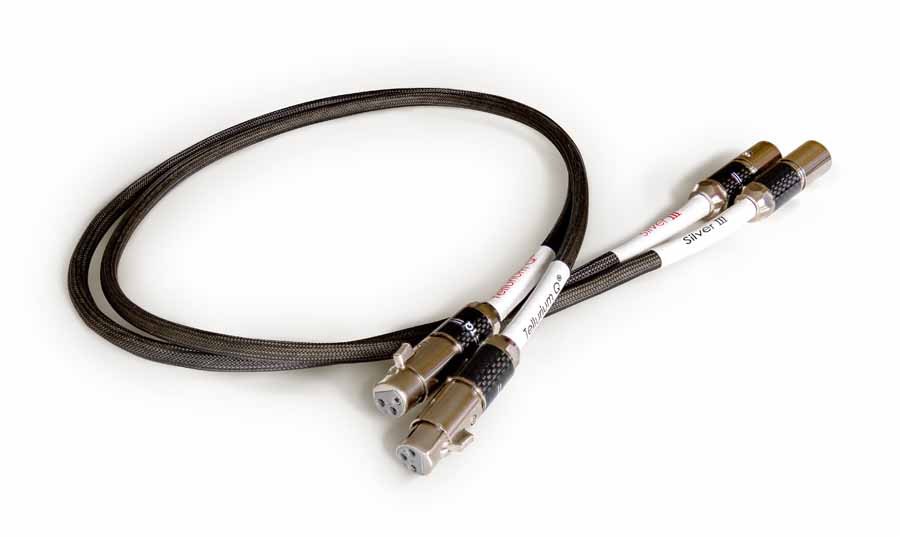
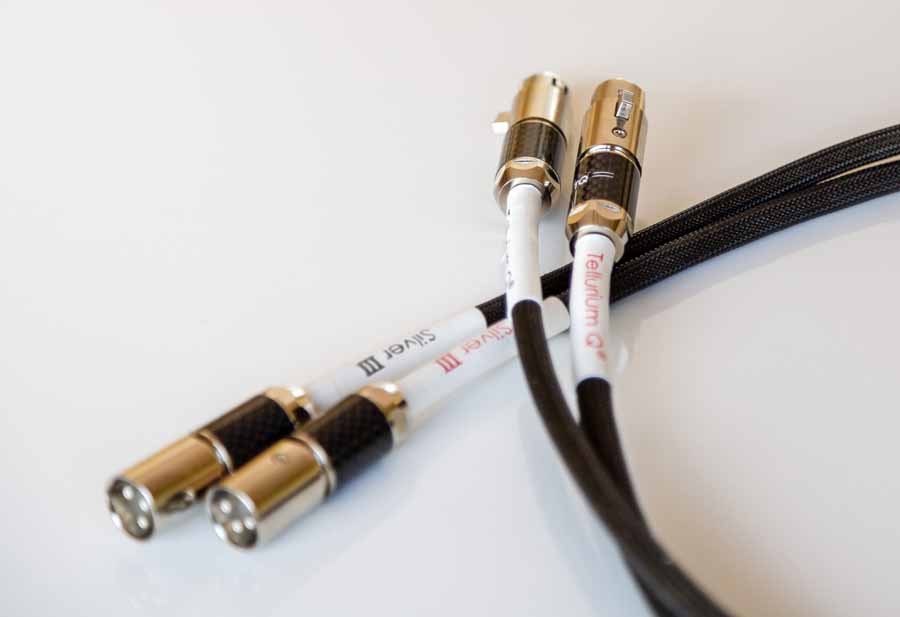
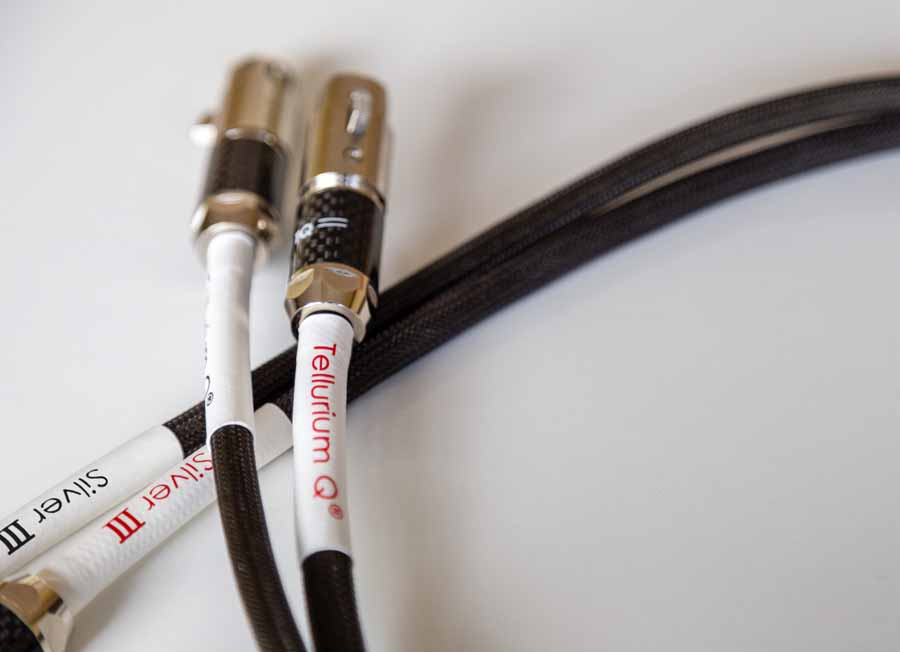
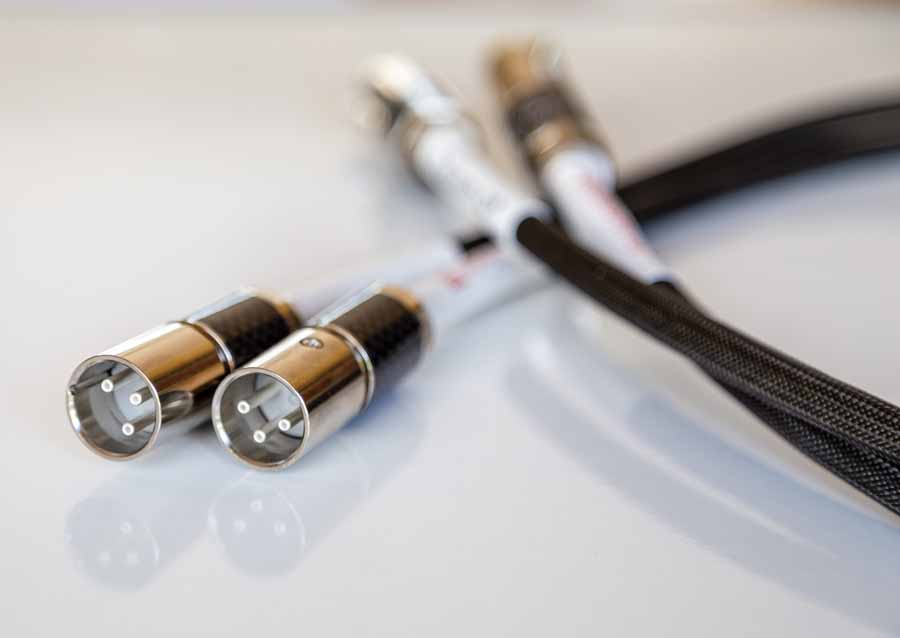
The latest Silver range includes the RCA Silver III RCA (£422.77/m), Silver III XLR (£570.02/m) and the new Silver III speaker cables, at £130.35/m. Whilst the interconnects are brand new models (only Ultra Silver interconnects have been available up to now), the loudspeaker cable looks identical to the previous (and similarly priced) incarnation. Something had to be different, but Geoff was never going to let me know his secret. Luckily, in previous reviews, I have always seen improvements in the updated models, but would that be the case this time? Where he is very clear, though, is on the three basic levels of products for the audiophile to choose. The Blue range is “warm and forgiving”, the Black range is “natural and transparent”, and the top Silver range is “detailed and dynamic”. Within those groups are 3 levels of products: Standard – such as the Silver III – Ultra (higher performance), and Diamond (the reference level). This is the 3×3 matrix. Due to these gradients, you will find that the prices don’t necessarily increase just as you go through the colours, so, for example, the Ultra Black II is a higher level than the Silver III. However, as the Black series is a different target audience, it is not simply that one is better than the other. Anyone who thinks that all cables sound the same might best not read any further for their own safety. If the three colours still don’t meet your personal requirement, then there is also the Statement series at the top of the tree.

For the review, I actually compared with other TQ and some Nordost cables to get a full understanding of TQ’s 3×3 philosophy and to give me a reference and bearing for the review. My present main loudspeaker cables are Townshend Isolda’s, and my reference, the Tellurium Q Ultra Silver II’s. Both sound different, and are used with different kit to get the level of musicality that I require. The Silver III’s up for review here are much smaller ribbons and considerably cheaper than the Ultra, but both fit into the same philosophy of detailed performance and dynamics. Geoff and his development team of three were so pleased with the result of the new loudspeaker cable that they decided there should be entry-level Silver analogue interconnects to join the ensemble. There had never been an entry Silver II or I interconnect.
BUILD AND FEATURES OF TELLURIUM Q SILVER III CABLES
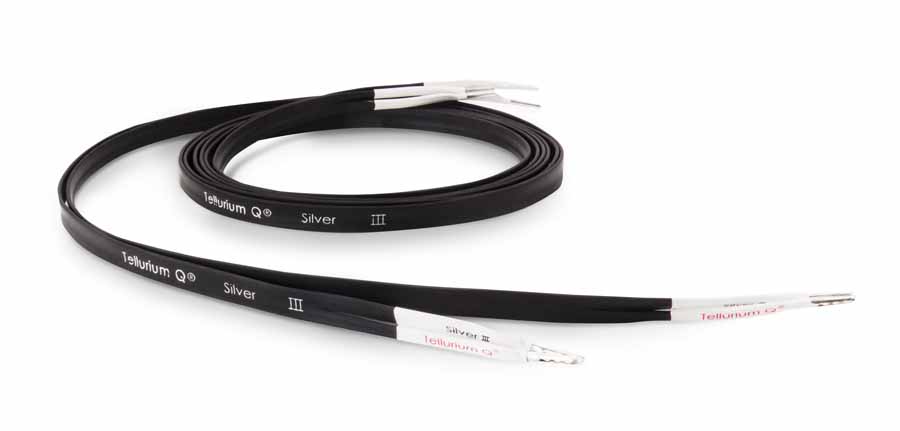
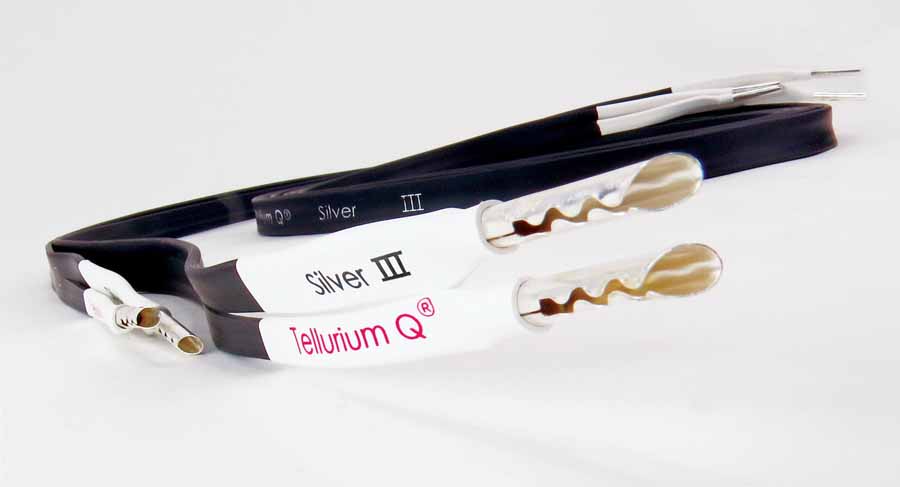
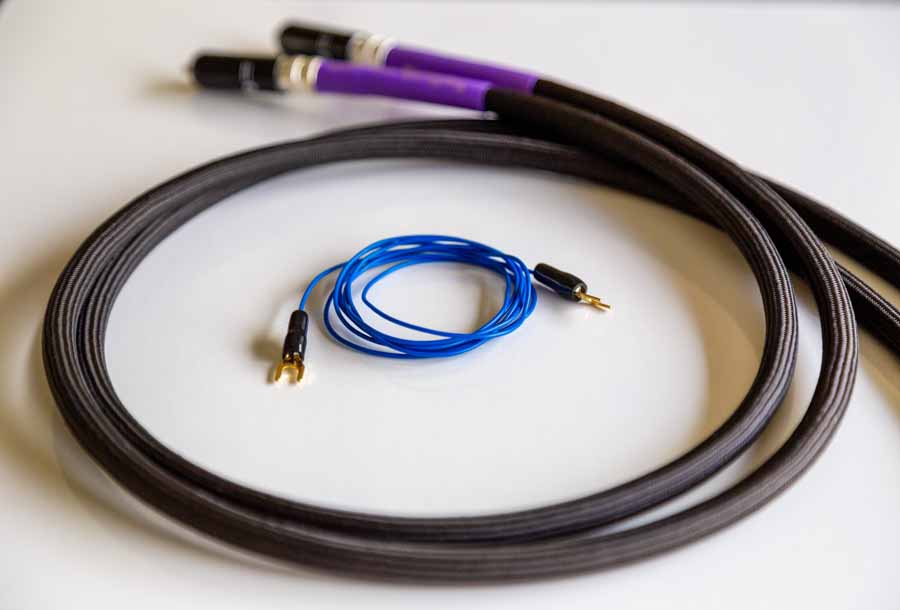
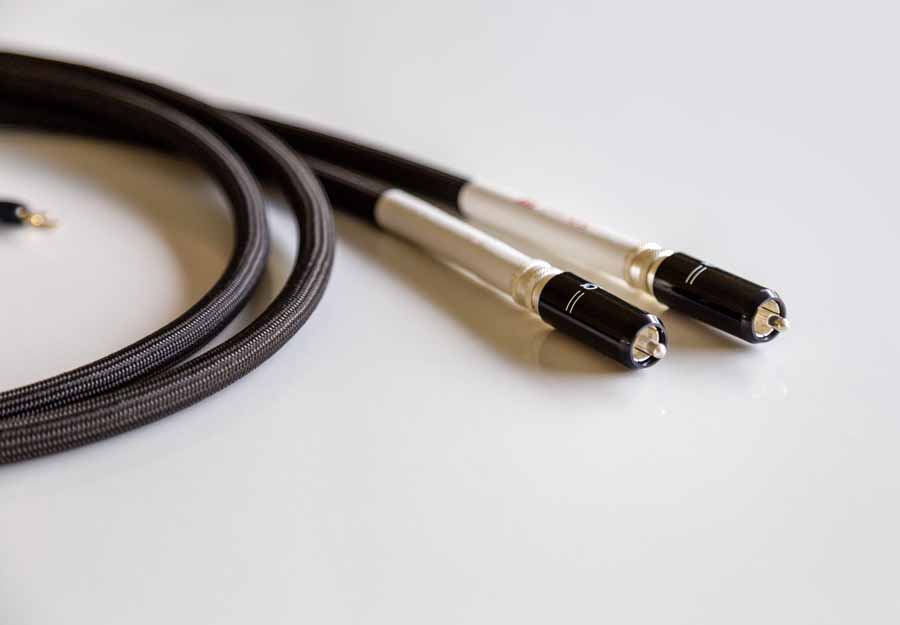
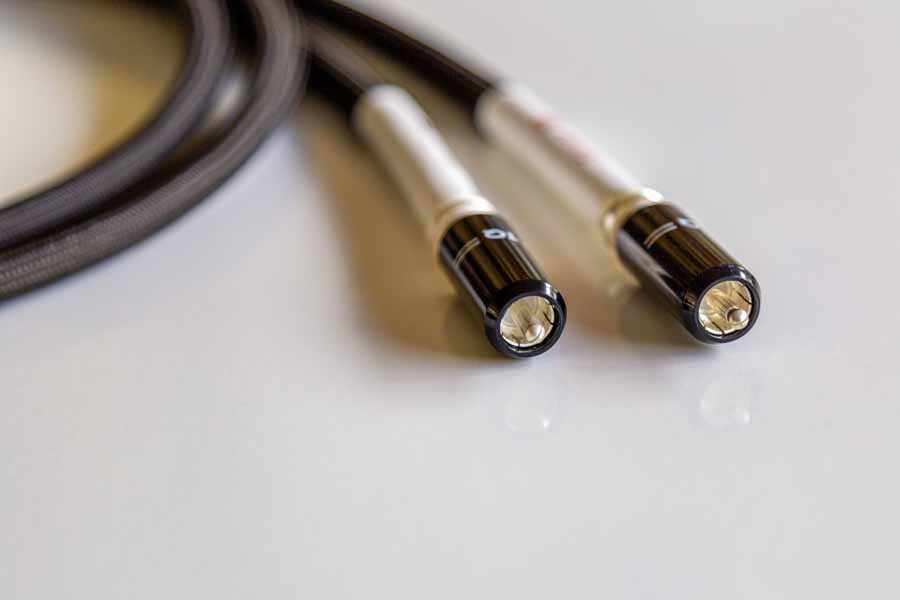
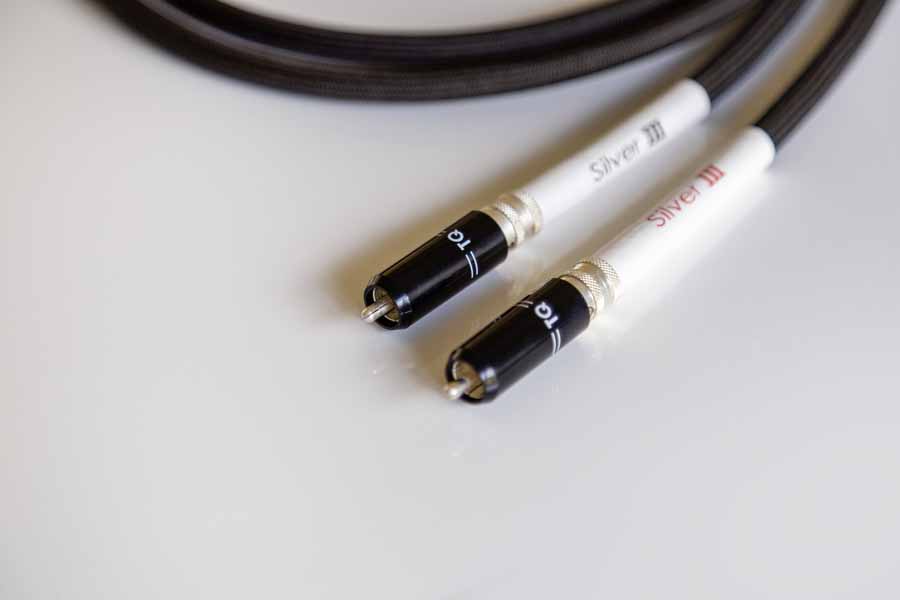
The Silver III loudspeaker cables might well follow on from the identical-looking Silver II, but there is a considerable difference between them. The new cable only has the same name so that it fits into Geoff’s important 3×3 matrix. The new cable began as an R&D project to see what could be done to improve on the previous model, rather than designing a replacement. As Geoff told me, “The Silver III was a stand-alone R&D project to see how much more could be squeezed from the original form-factor”. By looking at what could be added or taken away, Geoff and his team have produced the new cable. “We looked at what could be pulled out, put in, exchanged, mixed, all sorts, and ended up with quite a mix of conductor types that seems to complement each other across the audible bandwidth” Indeed, I have mentioned in previous reviews how Geoff just knows what to expect when he changes or adds components (even before he actually starts listening!), and this not only includes the dielectric and conductor, but also the solder, connector materials and plating, and even the mass and geometry. With a background in Industrial Chemistry, what he doesn’t know about cables really isn’t worth knowing. Whilst the interconnects are brand new products in their own right, the Silver III loudspeaker cable looks exactly like its previous namesake, bar from it being very slightly heavier. The same type of printing is written along the ribbon, even to the extent of slight inconsistency in the ink. The interconnect plugs are sourced from the same manufacturer as in other TQ models, as are the speaker z-plugs.
SETUP AND USE
For the review, I listened to the loudspeaker cables using interconnects I was familiar with, and then listened to the interconnects using my own speaker cables. Thus, I was able to compare each individually with a reference point. I used several systems in my review in order to get a variety of takes on the products, and deployed music that I was very familiar with, in order to get a chance to hear the differences. For the loudspeaker cable, those differences were surprisingly great, and for the interconnects, I used different manufacturers and different level TQ cables to ascertain where I felt the new Silver III fitted in. The amp was a Krell KAV250a power amp, and speakers included Wilson Benesch Arc/Torus and Russell K RED 120SE floorstanders.










SOUND QUALITY
I didn’t expect to hear any changes between the loudspeaker cables, but was highly surprised at just how great that difference was. Trying the II first and then the III, it was actually quite alarming going back to the II again. Listening first to UK-based jazz trio Tangalgo and the album ‘La Zucca Barucca’, I was able to really test out the amount of detail that the Silver could muster. This trio was set up to explore the space between jazz and tango, and this brilliantly recorded album has plenty of space between the instruments and the transients and decays, plus considerable dynamic range. After a triumphant first track, the next piece, “Libertango”, has a very quiet start with close-mic’d piano. This is a great track to test details and musicality. The Silver II did a good job in playing this, but it was only once I replaced wiring with the Silver III that I could believe that this was actually a real piano. In the long notes at the start, I could now really hear the “beats” from the long piano chords as the different frequencies of the notes were interrelated. Let me explain: as someone who tunes pianos, to get a really correct note, you need to hear slight pulses – “beats” or “coincidental partials” as you play the open chords; adjusting the string with the tuning lever until those pulses occur at the right time-frequency. With the Silver III, I could really hear those small audible pulses clearly, as well as the sound of the damper pedal and then the introduction of the double bass and drums. This is a very intricate performance that the Black range of speaker cables wouldn’t be able to “analyse” in the same way as the Silver can. As the track built up with both faster playing and crescendos, the Silver III kept it all sounding more musical than the II; the midrange wasn’t as confused or thick, with each tone being separated. The leading energies were better handled, and the cymbal spread was wider.
In Kenny Burrell’s 1963 “Chittlins Con Carne”, the new cable was tighter, with the hand drums faster and more precise. Even the cymbals were cleaner and more extended than those from the Silver II. But it was listening to my reel-to-reel copy of The Beatles’ “Come Together” that I really could hear how surprisingly adept the Silver III was; I guess I was surprised as the cable is a third the size (width) of the Ultra Silver II, and considerably cheaper, and perhaps goes to show that size doesn’t always matter. The brilliantly engineered (both musically and technically) start to the ‘Abbey Road’ album, with its complicated triplet semiquaver rhythm, was clearly portrayed by the Silver III, ensuring that this is very transparent with tight initial transients and note decays. The cable gave a more precise balance and accurate positioning of the instruments than the older cable. With the clearer distorted bass line from Paul on the left speaker, the music really made sense to me. It should do; this cable at £130 per metre is not cheap, but it shows you why bell-wire should only be used for holding up trousers, or bells. It might not have the bass and control of my Ultra Silvers, but this new cable really was a surprise to me in just how controlled and involving the music now was.
Connecting up the interconnects was also very revealing. Playing vinyl, I chose my favourite piano work, Rachmaninov’s Prelude op.3/no.2 in G minor. I have a recording of the composer playing this work on an album titled ‘Rachmaninov Playing Rachmaninov’. The sound quality of this 1979 recorded collection of pieces is amazing considering Rachmaninov died in 1943. To prove that digital pianos existed long before Yamaha introduced Clavinovas, Rachmaninov recorded a collection of pieces between 1919 and 1929 using the Ampico system (American Piano Company). As he played on a special Ampico concert grand, his notes, dynamics and pedal movements were precisely recorded on piano rolls and then replayed 50 years later at the Kingsway Hall, London, for Decca on a special Estonia 9ft grand piano for the album. One would expect his playing to be really technical and fast, especially as he had gigantic hands, but he actually starts this piece so slow that it actually sounds wrong, and even adds his own extra notes at the end that aren’t written on the score! Artistic license, I guess. The Silver III really captures his playing accurately and surprisingly musically, considering all this was pre-MIDI! The tone is significantly different to that of a Steinway grand piano. His slower performance at the start similarly allowed for plenty of space to hear those harmonics as in the Tangalo.
Playing Patricia Barber’s HDCD ‘Café Blue’ album on my Krell CD player, I decided to listen to a series of XLR interconnects, including similarly priced Nordost Red Dawn Mk1 XLRs, the TQ Ultra Black, and, of course, the Silver. These 3 cables sounded so different, and this also affected how long I wanted to listen; the Red Dawn has great speed and very tight, deep bass and top frequencies, but I found it too clinical for long listening sessions, with a slight mid-recess, and not so natural. The TQ Ultra Black had more bass end and was smoother than the Silver, but the Silver was much tighter and more vivid in its performance. Both TQs performed with great ease; nothing sounded harsh or stood out unnaturally. In track 2, I could even hear some mic pops that I hadn’t picked up before, plus some harmonics from the double bass. Track 4 has lots of space between the sounds, such as the acoustic guitar, carefully tailored by the cable, and on track 5 the cymbals were incredibly precise, as were the transients of the bass tom-tom, especially at 2’22”. I could really feel the air move. The top frequencies, whilst detailed and extended from the Silver III, were never grainy; even when playing the top-heavy Gerry Rafferty “The Ark” or “Baker Street” didn’t cause me too much stress, unlike with the Red.
QUIBBLES
My only observation is the quality of the writing on the cable has areas where bits of words are missing, but I’m assured that this won’t affect the sound quality.
CONCLUSION
Geoff wasn’t really expecting to get any commercial success from the onset of developing the Silver III. He and his team used it just as a challenging project to find out what else they could learn about signal propagation. What they have achieved with the Silver III is something quite extraordinary, and adding the interconnects, too, now fills more space in that matrix. For those who still believe all cables sound the same, I suggest you try each band in the TQ matrix; and if you want a detailed and dynamic performance that keeps you hanging on to every note of your music but can’t quite manage the Ultra Silver investment, then the new Silver iii cables will be well worth auditioning. I easily give this series of cables Five Hearts.
AT A GLANCE

Build Quality And Features:
Well constructed cables that are easy to connect and with good connectors
Sound Quality:
A very detailed and wide soundstage capturing all frequencies evenly, and with fast transients to give the music the bite it deserves
Value For Money:
They bring the highest level of the TQ 3×3 matrix to those with the smallest pockets
We Loved:
Excellent initial transient speed
Clean top frequencies
Very revealing
Good looking speaker cable
We Didn’t Love So Much:
Just wish I know what was inside
Elevator Pitch Review: I am never surprised that Geoff and his team at Tellurium Q always seem to get something more out of their cables every time they bring out a new version. The Silver III, though, is not actually an “improved” II; it is a completely revised cable that just happens to look identical and sits in the same spot in their 3×3 matrix system. When I was about to listen to the “old” and the “new” loudspeaker cable, I actually didn’t expect to hear how much of a difference there was. And as Geoff liked it so much, he has even brought out matching RCA and XLR interconnects to complement it, so you don’t necessarily have to save up for the Ultra Silver!
Price:
Silver III speaker cable: £130.35/ m; Silver III RCA: £422.77/m; Silver III XLR: £570.02/m
Janine Elliot
SUPPLIED SPECIFICATIONS
Shhh! It’s a secret.