Quad Platina Integrated Amplifier


























































QUAD PLATINA INTEGRATED AMPLIFIER REVIEW
The Quad Platina Integrated amplifier is a thoroughly modern design that has been five years in the planning. Jaine Elliot takes a listen to this £3500 integrated from a name most people will know very well.
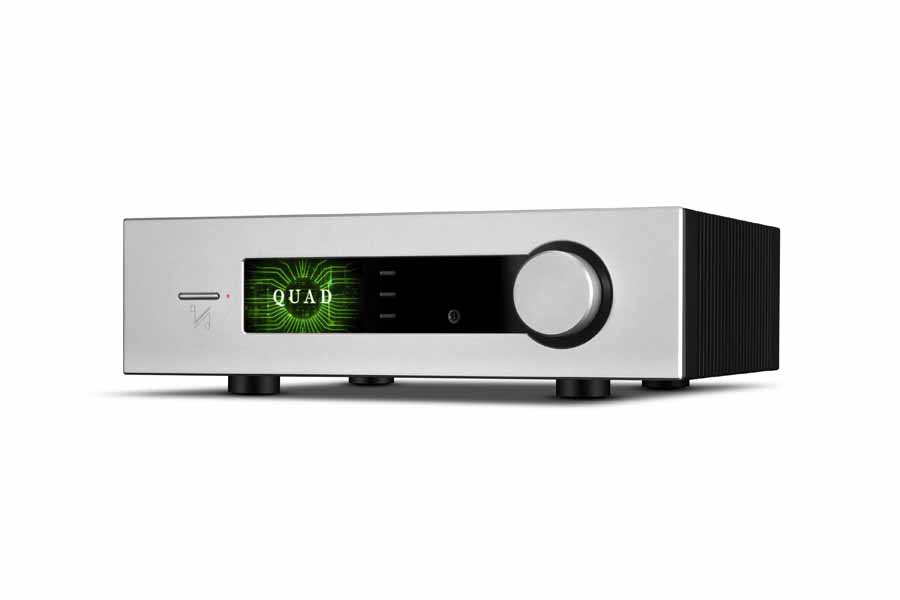
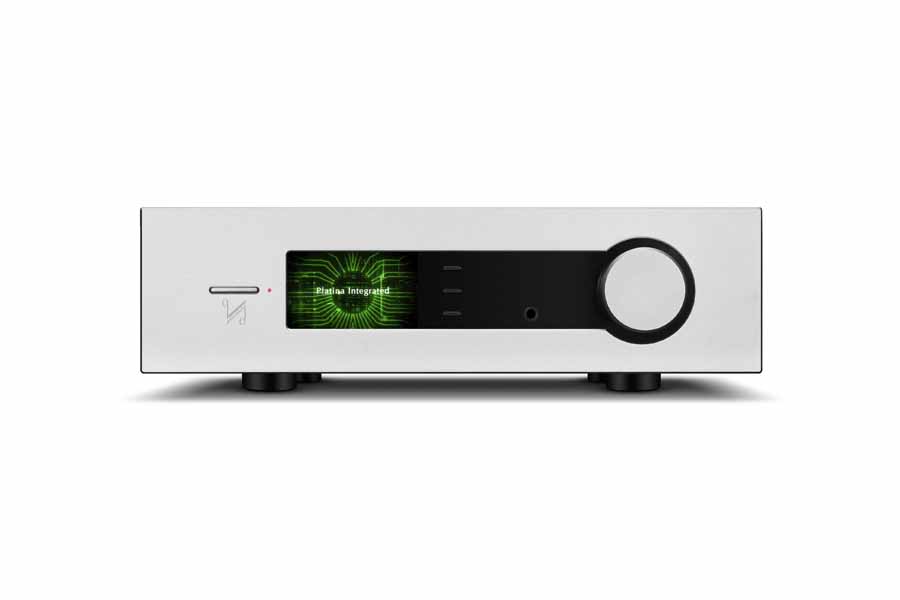
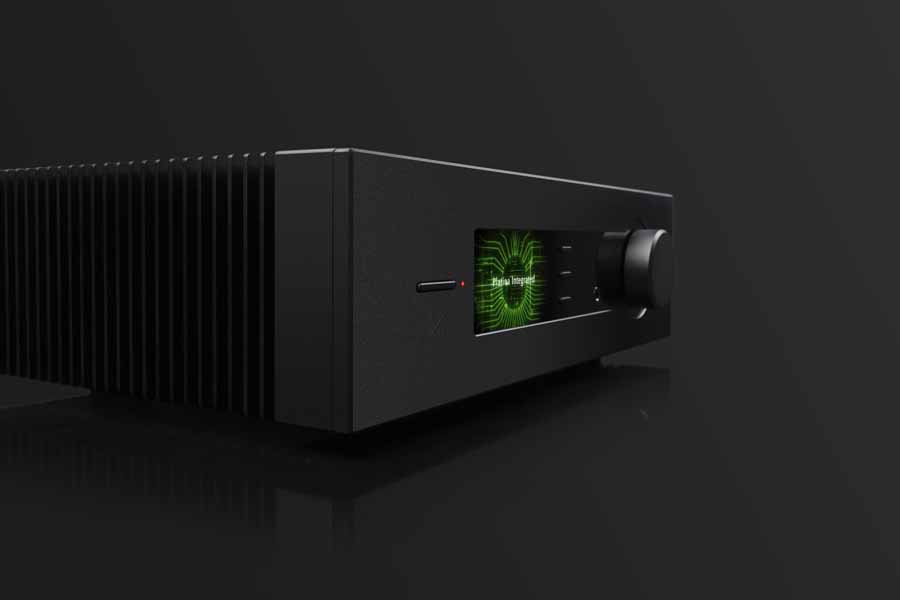
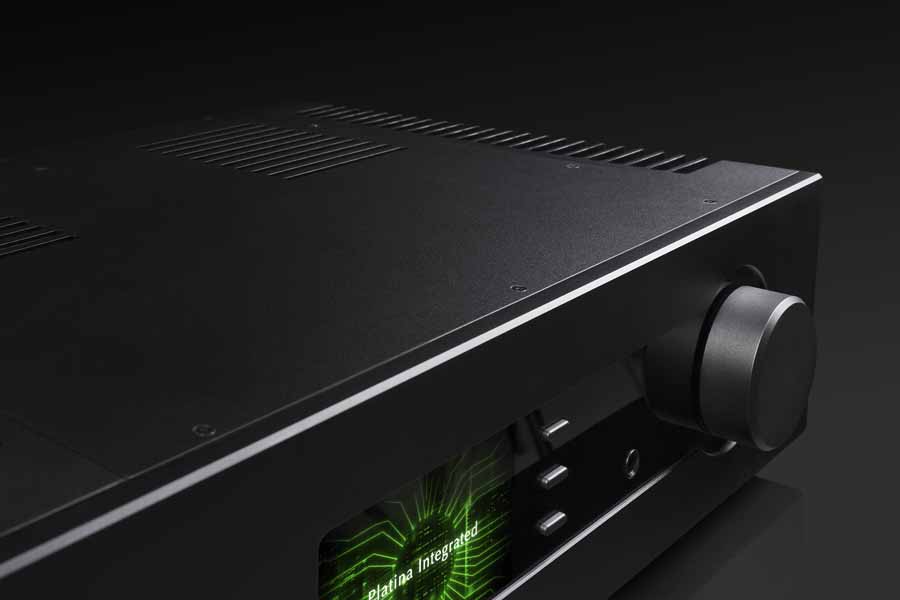
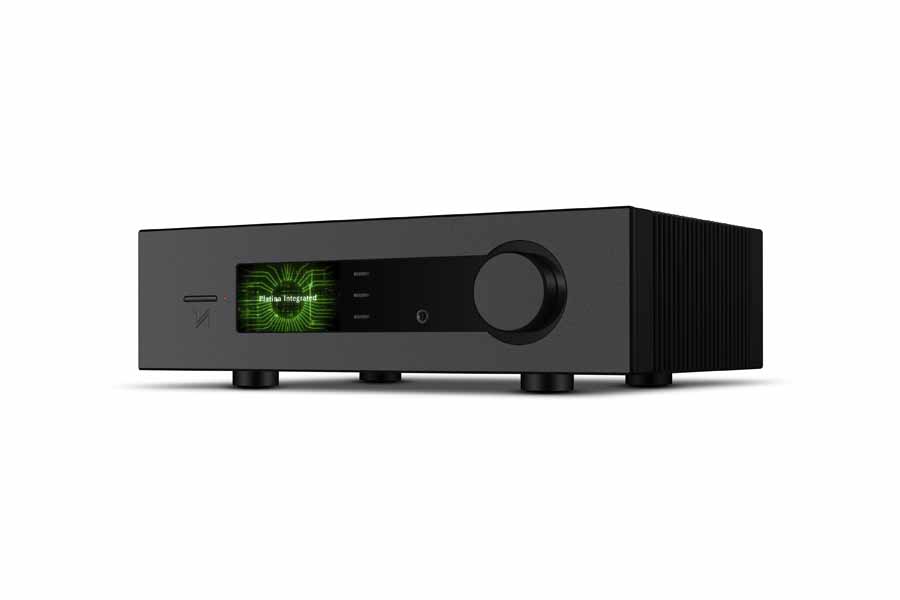
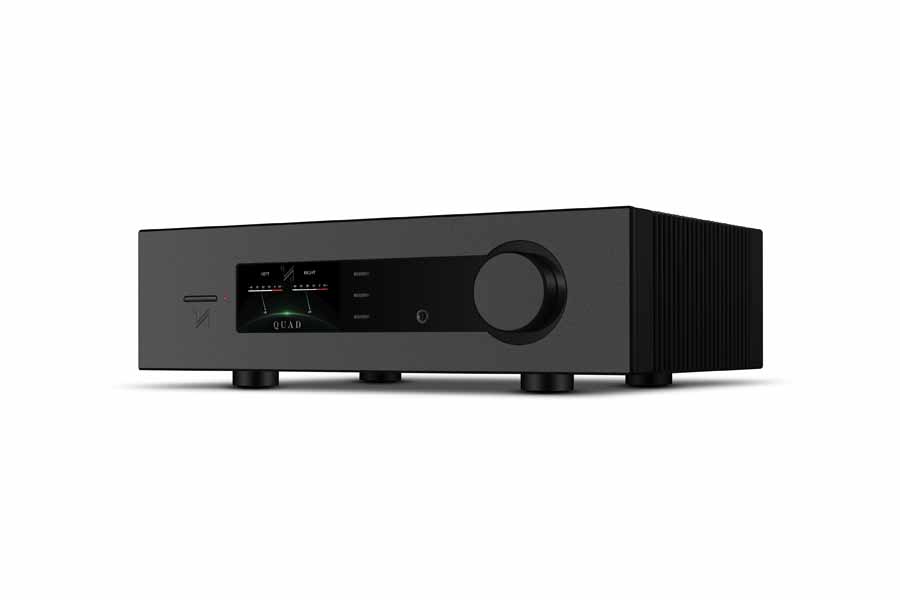
I remember my QUAD 405 as a child with its iconic fins at the front to cool those output transistors. I was even more excited when I added the 34 pre-amp, and with its bigger 44 sibling, two of the best-looking pre-amps of all time (even more in my opinion than the 33!) Things have moved on apace since those great days, and the Platina retains some of that nostalgia. This time, fewer buttons on the front, but now a large volume (and now also GUI selection) knob on the front-right of a darkened plastic rectangle remains. However, that’s where the likeness ends. That famous orange and grey have gone; this is not retro, like the new QUAD 3 and 33/303. Gone are all those lovely buttons and clever tilt EQ. This is a stonking great heavy minimalist 200W amplifier with the fins at the sides, and a lot more facilities at the fingertips, ideally from the remote control, and whilst designed at their Huntingdon HQ, it is made in China and owned by IAG. At £3499, it is actually tons of mass for the money, weighing in at 17.1kg. 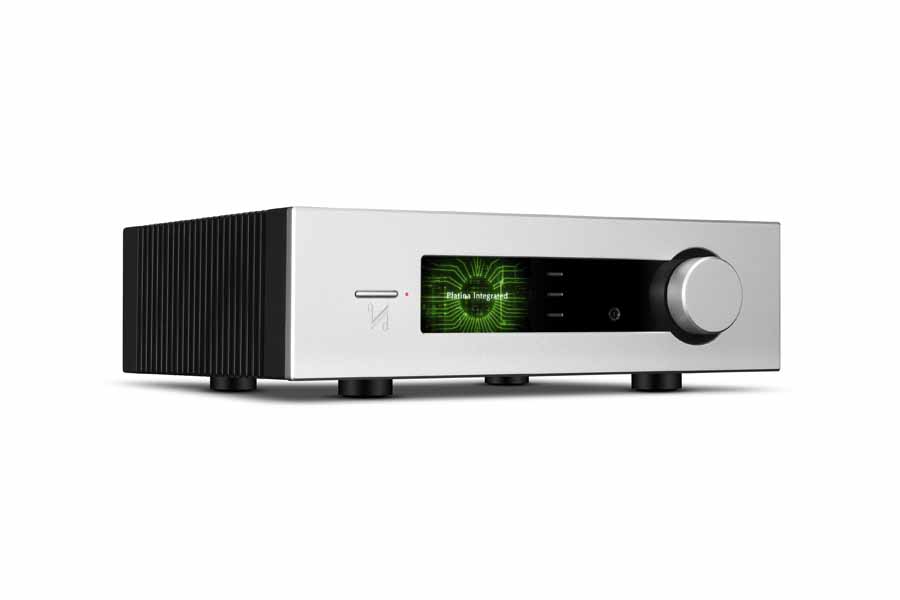
I have four icons from my past: Harold Leak, Sir Clive Sinclair, Sir Alan Sugar (I’ll explain that one day…), and Peter Walker. What great things Peter did for audio have been written in numerous books and features, so I won’t elaborate, other than say 33, Triple Output Stage, ESL57, and current dumping. The original company, The Acoustical Manufacturing Company (also as S.P. Fidelity Sound System), was set up in London to make public address equipment in 1936. Peter relocated to Huntingdon near Cambridge after his premises were destroyed by WW2 bombing in 1941, and after the war, decided to venture into high-fidelity equipment. His first products, the QA12 and QA12P pre-amplifier in 1948, followed by a ribbon speaker in 1949, started his foray into domestic audio. To distinguish his HiFi gear, he used the acronym “QUAD,” (Quality Unit Amplifier Domestic), and as that name was easier to say and became more popular, it was used from the early fifties with the QUAD1 amplifier, but it took Peter until 1983 before he officially changed the company name. The images of a pipe-smoking husband in slippers sitting listening to music with the wife on another chair hit the magazines, though as the high quality and impact of their products grew over the years those tacky adverts luckily became more specific to the quality of sound, and his tag line “for the closest approach to the original sound” and his famous motto “straight wire with gain” became pet HiFi catchphrases. If the latter is true, then the Platina and its accompanying Streamer are pretty thick wires. The 1967 33/303 combo still is their biggest-selling product of all time, taking them in to the world of transistors, but their ESL57 (actually from 1956 when it was just called ESL), ESL63 (which started in 1963 and was finalised for sale in 1982), and 405 current-dumping amplifier from 1975 really put QUAD on a pedestal for acoustic achievements in the UK. The company was honoured with the Queen’s Award for Technological Achievement in 1978, and Peter sadly died in 2003 before he was able to bring forth a totally radical cube-shaped electrostatic speaker.
BUILD AND FEATURES OF THE PLATINA INTEGRATED AMPLIFIER
This is not a normal QUAD product. They have gone all out here to create something bigger, better and more expensive than the retro designs of recent years, so I was really expecting a radically different sound. For an amplifier 445mm wide, almost the size of my KRELL KAV250a powerhouse with its 50,000μF filter reservoir and 2,000VA rating (it dims the lights on switch-on!), the Platina gets surprisingly close in acoustic oomph and energy with its 44,000μF capacity/channel and central 630VA toroidal transformer. With 200W (8-ohm) and 300W (4-ohm), plus cascaded voltage regulators in both analogue and digital stages (their deployment creates higher efficiency and lower noise), this dual mono design is their most substantial amplifier yet. Whilst it has a 20A maximum output current, the peaks weren’t quite as grand as in my KRELL. 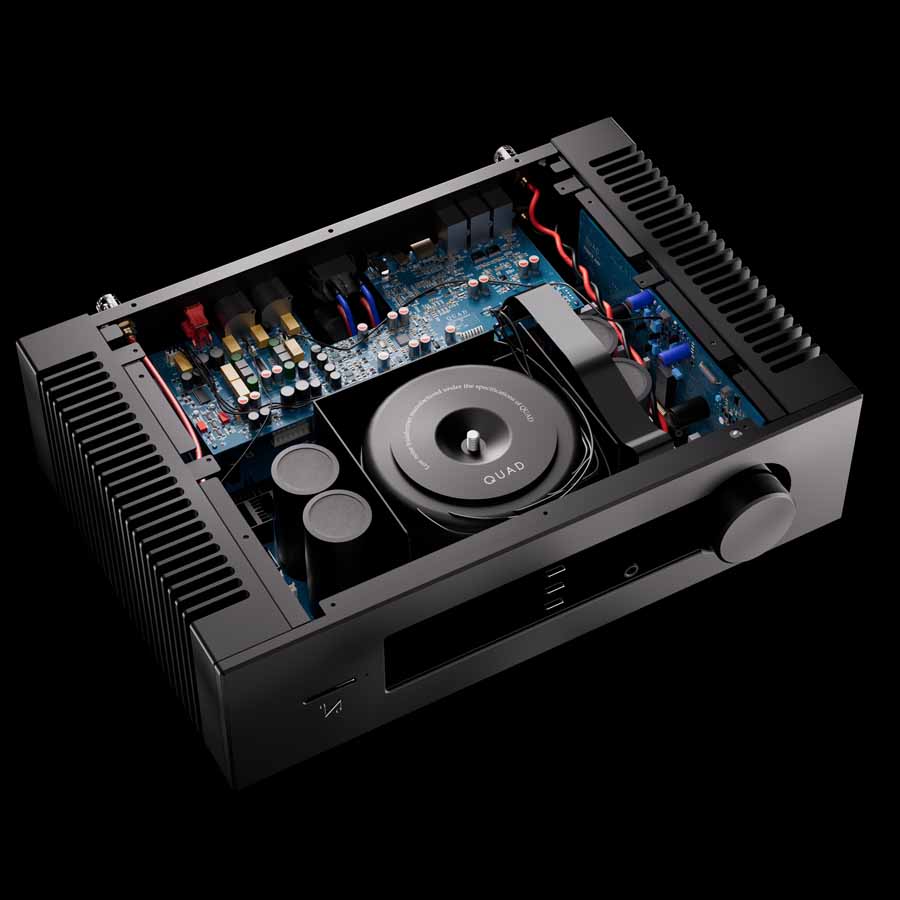
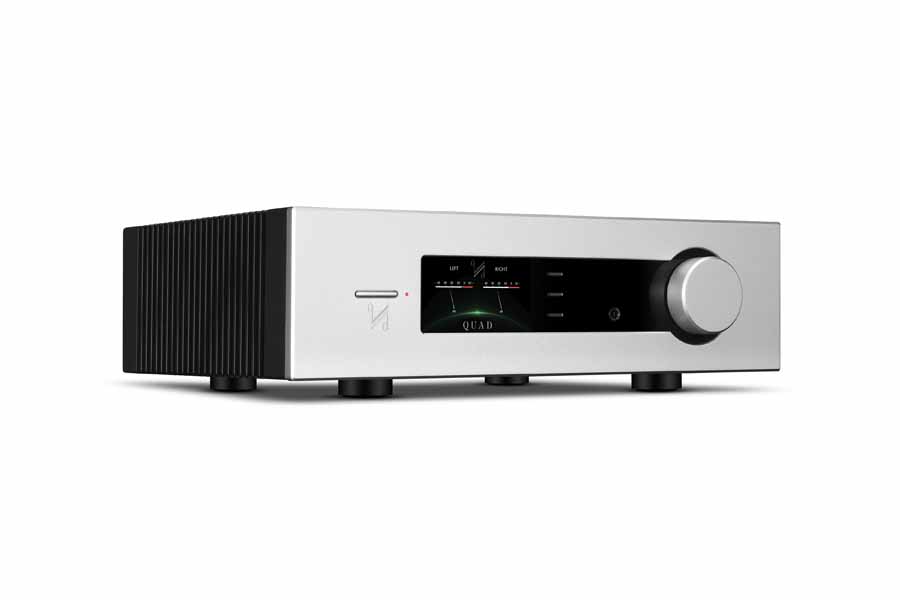
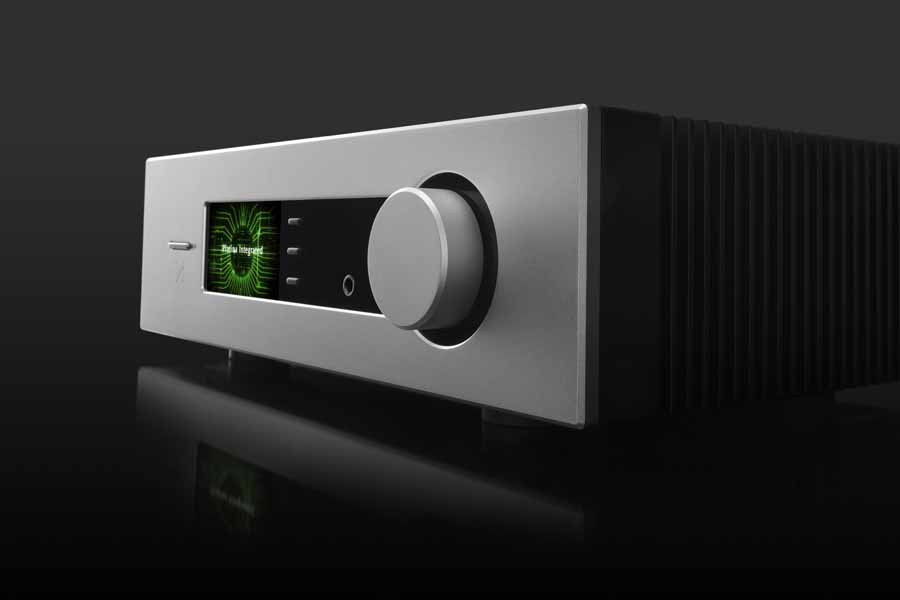
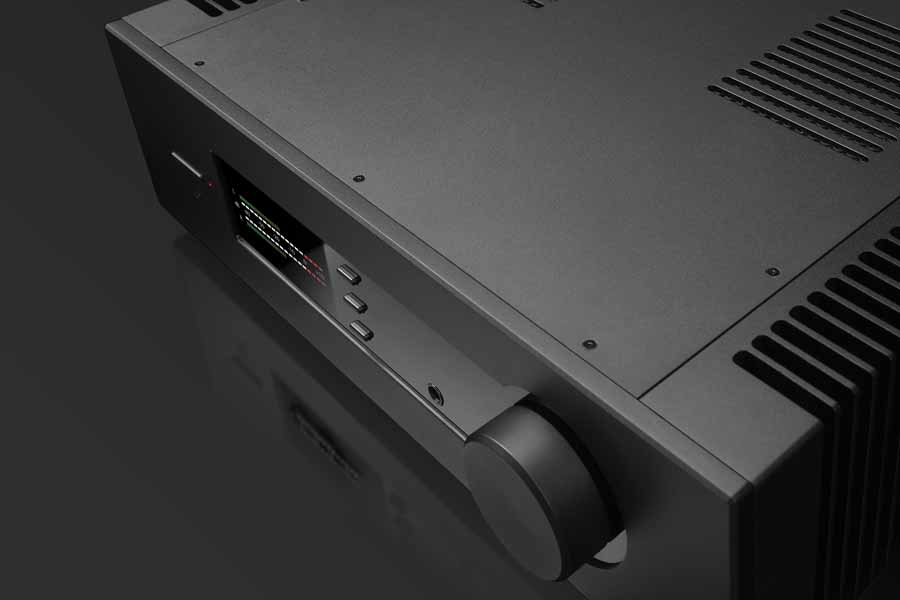
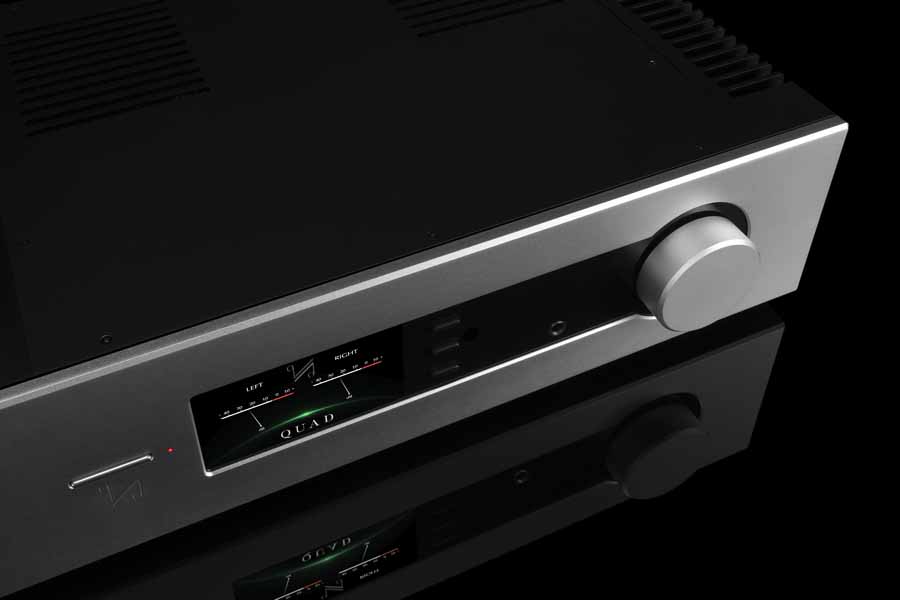
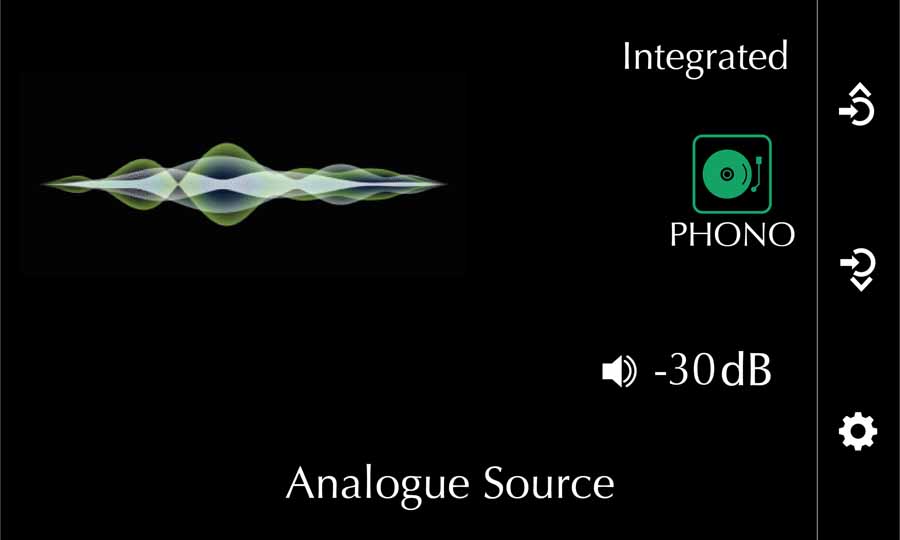
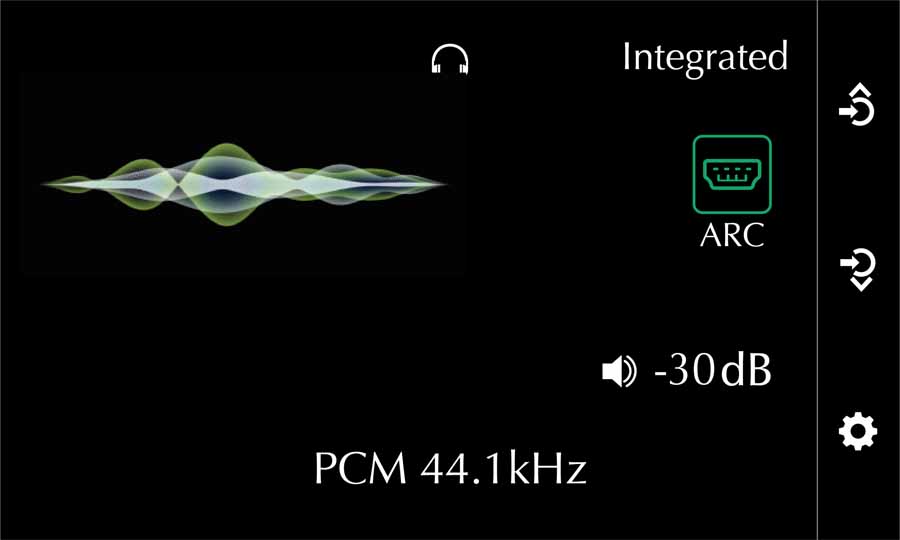
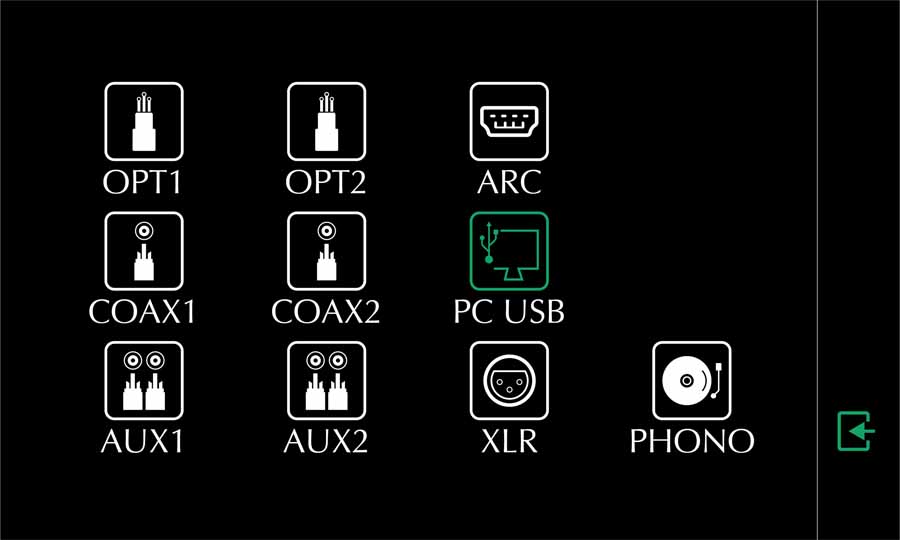
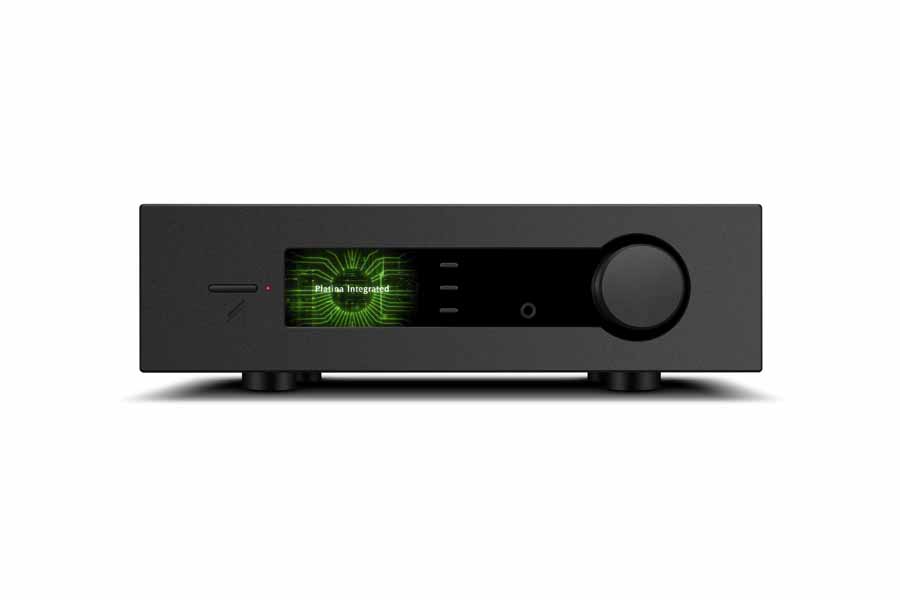
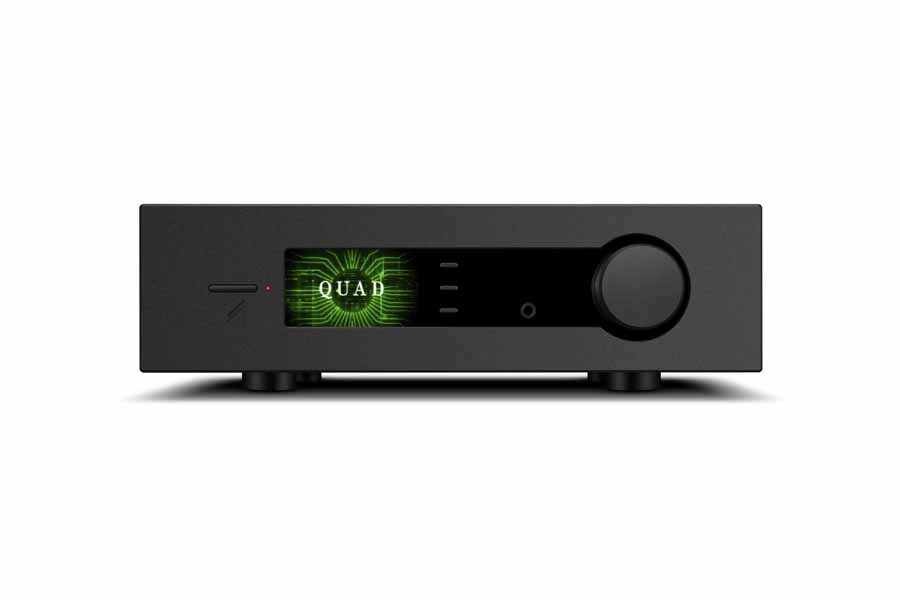
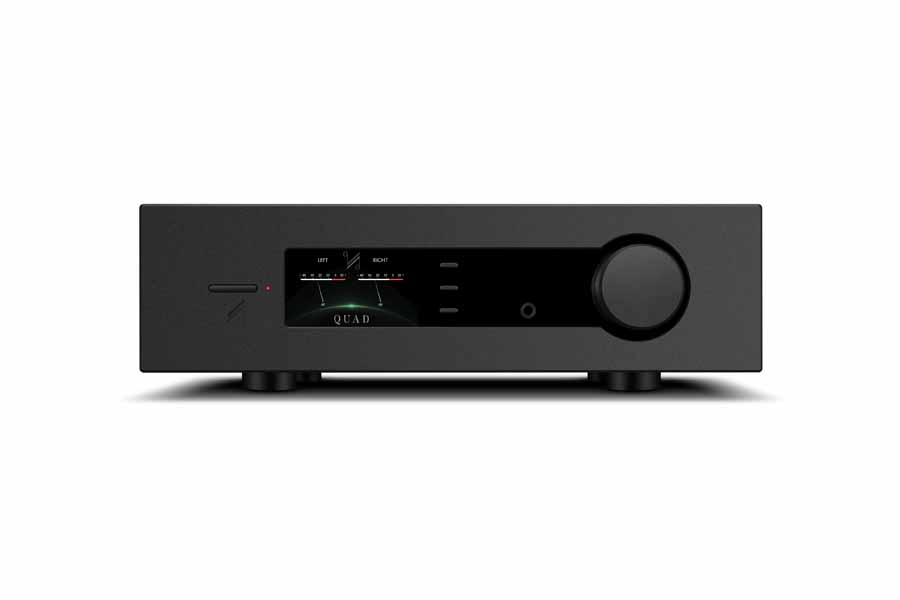
The unit has a simple front in black or silver with a long standby button on the left and red LED to its right, which stops glowing when you turn the unit on, and the 800×480 pixel 4.3” IPS LCD screen within the central black plastic section takes over the light display. The only reason you know it is QUAD before you turn on is the clever 2-semiquaver notes indicating the “q” and “d” of QUAD. Once switched on, that great name is retained at the front in the LCD as one of the options, if you wish to be reminded. That screen is not touch sensitive, which is a shame. The 3 buttons on the right of the screen are hard to see in the dark area, but combine the source selection and function buttons. Pity they aren’t the same colours as those on the 34/44! Cycling through all options is then done by the push-button volume control. Alternatively, use the remote control, as I did, as it was so much easier, but the GUI is actually quite intuitive. Also on that central black fascia is a ¼” headphone jack, so you can listen to cans utilising a current-feedback design headphone stage for 20 to 600-ohm ear warmers.
This amplifier has a lot of great features, such as MM and MC phono-stage, plus wired digital inputs dealt with by an ESS Sabre ESS9038 DAC (I expected that to be the case with IAG products). However, QUAD expect you to buy the matching Platina Streamer should you wish for BT and WiFi. This omission was a surprise to me, especially at this price. The rear is well stocked with socketry, and the most notable observation is the massive central main off/on rocker switch. You can’t miss it, which is great, saving you from fumbling around the back, as with many amplifiers. Also central is the IEC mains socket, meaning no worries about your cable not reaching one end, plus ensuring minimal wiring to the PSU. Accompanying the 4-way gold-plated speaker binding posts at either side for both channels are from left to right: coax/optical output, two coax/optical inputs (44.1 – 192kHz), an HDMI ARC, and a PC USB type C input (44.1 – 768kHz PCM, and DSD up to DSD512). This is followed by a USB update socket, in/out 12V 3.5mm triggers, then analogue XLR, and 2 RCA line inputs plus phono RCA and grounding connector. Analogue outputs include XLR and RCA, should you wish to use an additional amplifier, sub or processor. All is very neat and professional, with RCA-pairs just distant enough to allow large plugs. 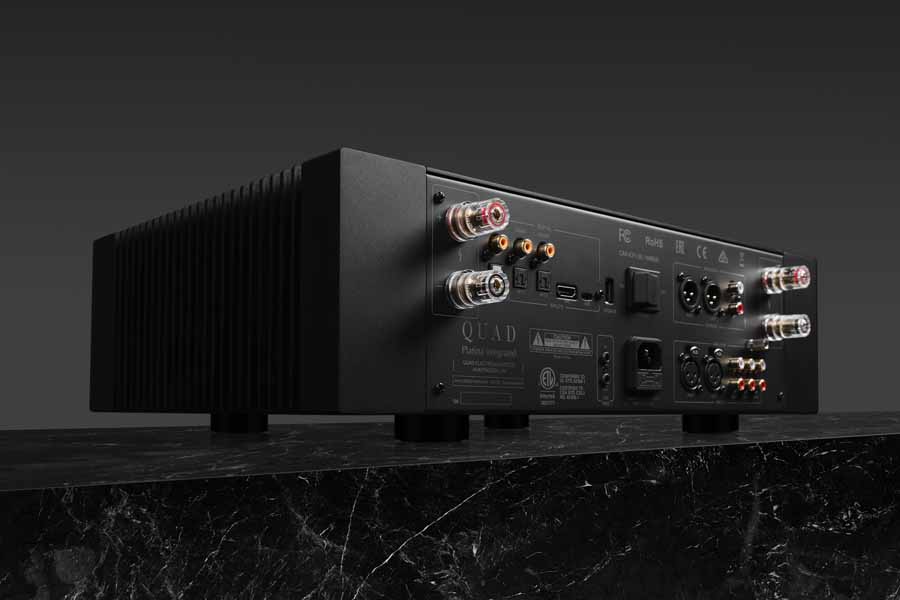
The inside is very neatly designed with the shortest paths to each section. Apparently, many thousands of man-hours, some five years, were deployed in bringing this all to fruition. Indeed, several different circuit component choices were tried out before coming to the chosen model for release. Having looked at their past and then starting again from a blank sheet, the Platina range has been put together slowly and precisely; this was always Peter’s ethos. The ESL63 took 19 years!
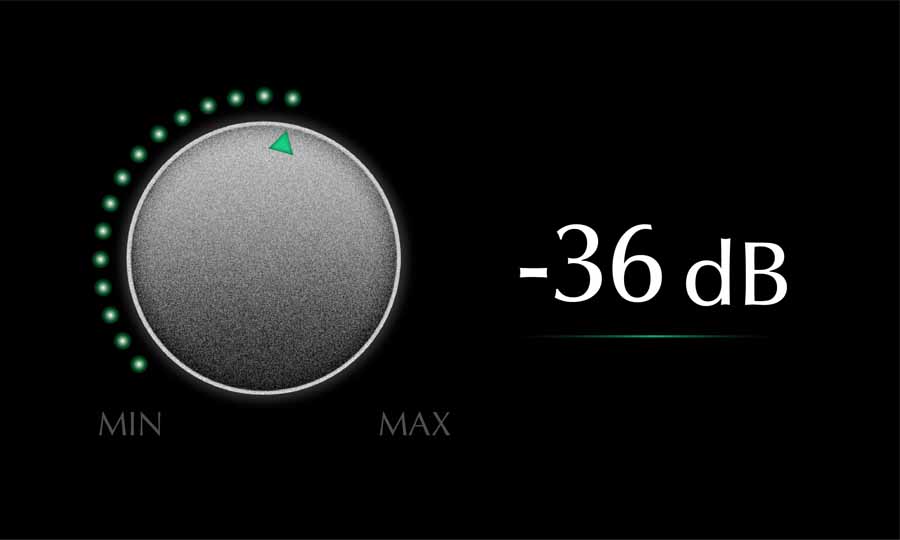
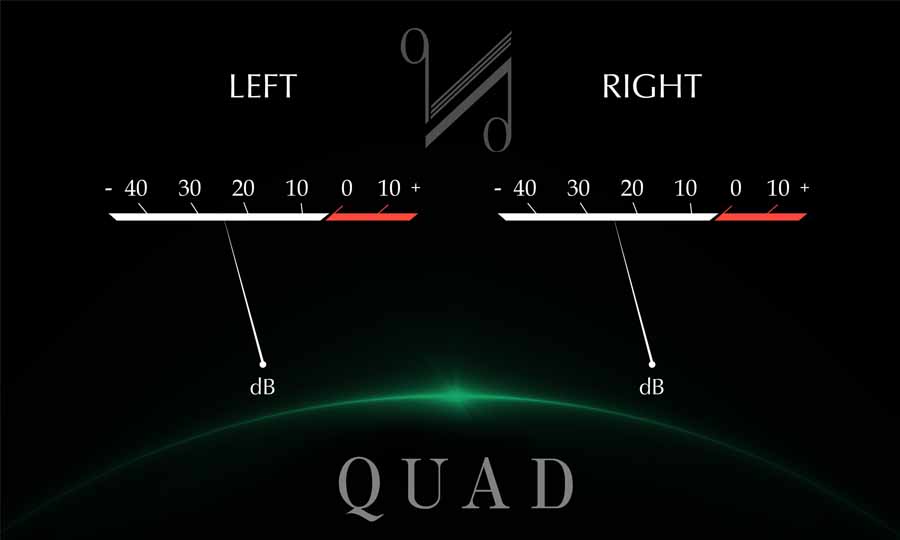
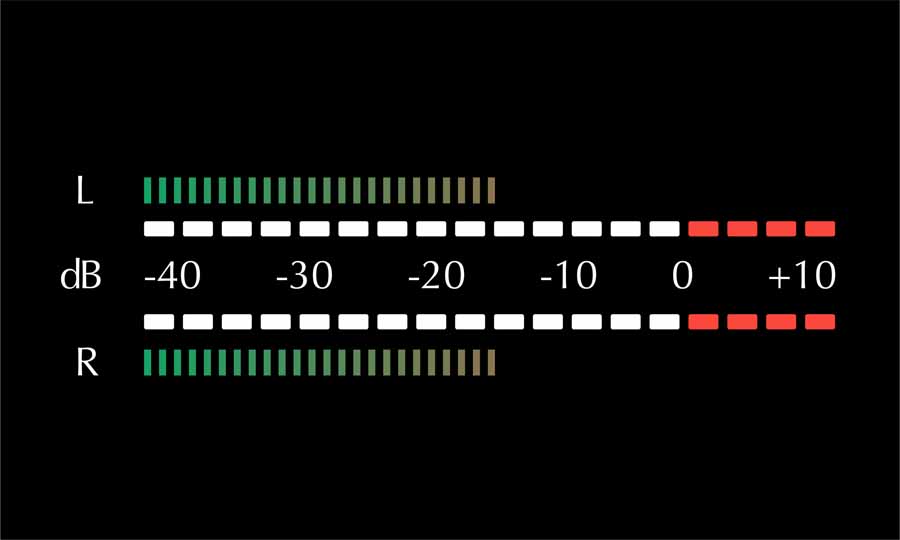
This is a dual-mono Class A/B design, meaning everything is in two halves – even the smoothing capacitors, developed with Wurth Elektronik. Their 44,000μF capacity ensures there can be some great peaks of musical energy into even the most demanding speakers. It is also balanced all the way, and that also includes the way the 32bit 8-channel DAC is deployed, and also the computer-controlled volume control. Control of sources is perhaps best done via the remote, and this enables not only changes in level of each input by up to +/-6dB in 1dB steps to ensure your sources sound at the same level when switching between, but also fine-tuning with 5 digital filters. My favourites were “Linear Slow” and “Minimum Slow”. The latter gave slightly more bass energy and speed. The amplifier also has ROON certification for network streaming. It is great to see MM and MC inputs delivered via a JFET-based design. Both have three level settings: 46, 52 and 60dB. Should you need additional gain, there is, of course, the 6dB extra in the general volume “page”. MM cartridges are set at 50k-ohm/100pF and MC at 360-ohm/200pF. A selection of load resistances for MC would have been the icing on the cake. Other options in the Menu tree include DPLL adjustment (to help if your digital source has high jitter that affects the flow of the music) for Opt2, Coax2 and ARC inputs (normal/wide), upsampling, power-on limits (so you don’t accidentally blow your speakers when switching on if the volume was last set at maximum), various display options including analogue and digital VU meters (I preferred the latter, which was also slightly quicker in response), trigger, language and standby options. There is also a reset button.

SETUP AND USE
That reset button actually came in useful when I first switched on. The balance control had been set at +3dB to the left when the unit arrived, making everything sound lopsided, but after a few seconds thought I was able to go to “Balance” and set it central. Just in case anyone was actually trying to catch me out, I reset the whole unit back to factory settings, so I could adjust filters, levels, etc as I felt fit. I connected a Bluesound Node to Aux1 input, a Fiio DAP digital-out to Coax, my Pre-Audio Tangential turntable/Ortofon Kontrapunkt b to phono (MC), and reel-to-reels to Aux 2. Speakers were Wilson Benesch and Graham Audio LS5/9. Cabling was a selection of Townshend/Tellurium Q.
SOUND QUALITY
Initially, I played various digitally-sourced albums to ponder on the vocals – QUAD has always been great on speech and vocals. As a BBC sound engineer, Bush House and Broadcasting House were full of 50E’s, 303’s, and 405’s for decades! After playing one of my own songs, “Vertigo”, I could hear that the midrange is indeed well balanced and even clearer.
Amy Stroup’s “Magic” is fast and detailed, with an excellent bass-end. This is a lively track, so I cooled things down with my favourite track “In the Shadows” (2016). The initial transients from the percussion, plus the misty atmosphere throughout, are brilliantly precise from the Platina; this amp is no slouch, but it can be a little clinical. Similarly, her vocals are very clear and break through the music to enable you to hear admirably. The violins are also clearly positioned across the soundstage, and the great synthesiser bass descending run at 3’08” was perfectly performed in my listening room.
Next to male vocals and Paul Weller’s “Wild Wood”. The vocals and acoustic guitar were very tight and pleasant.
That punch to the sound that I could hear in Amy’s music was also clearly audible in Marcin Patrzałek’s “Kashmir”; tight bass and fast transients from the acoustic guitar strings and belly and neck hits from his fingers. Hard to believe this is just a solo guitar with all the percussion sounds, performing in his percussive style, much like Antonio Forcione. Soundstage depth was also noticeably grand. The Platina was really getting me excited. The earlier QUADs could never make this sound so lifelike and fast. Playing the brilliantly clever vocal and percussive start of The Beatles’ “Come Together” on reel-to-reel, similarly showed how fast this amp was at capturing detail with very fast transient response and energy. This fast triplet rhythm from Ringo, bass from Paul, and distorted guitar riff from George was bold and tight.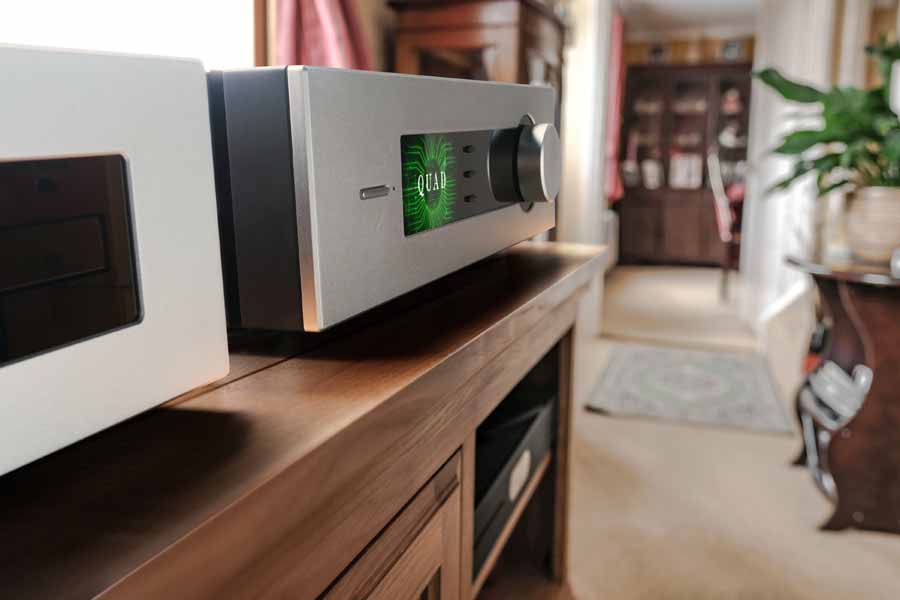
Moving to phono, MC and MM, I was able to hear a really cleverly designed EQ stage. Although for the MC I would have preferred a lower load resistance (50/100 ohm), it was a very quiet and has a flat response, making all my vinyl sound good.
YES ‘Mirror in the Sky’ from 2023 might be 51 years after their iconic album ‘Close to the Edge’, but it is still great music, if a tad slower. However, the Platina gave a very precise performance, with the QUAD being very good in trying to keep this detail and tightness, and whilst the aged main musicians Steve Howe and Geoff Downs, and the slightly younger colleagues made music, the QUAD at first just couldn’t quite excite me. I wondered if I should add my aged 405 to the pre-out and listen through that. However, that sound was from another era, and this new amplifier is all about detail, energy, speed and brilliance, something much different to the 405.
In all my listening in the review, I found that I needed to get up to 75% (around -21dB) volume to really get things glowing. Luckily, my favourite track from the album “One Second is Enough” just took that long to understand just what the amplifier was trying to do. The detail, control and attention-grabbing of the music.
If your world is of that iconic QUAD advert with pipe-smoking husband, and the wife relaxing before making him his dinner, you won’t want this amplifier. The Platina is for the 21st-century audiophile. This is even bigger a statement than the iconic models of yore, not least with the accompanying streamer and soon-to-arrive CD player. This is QUAD looking to the future, rather than its past, with more retro. The onboard functions and settings are easy to navigate, enabling you to get a very precise and exciting sound, whilst still maintaining that musicality.
The remote feels and looks good, and being a universal remote will operate the Platina Stream and Platina CDT CD player. 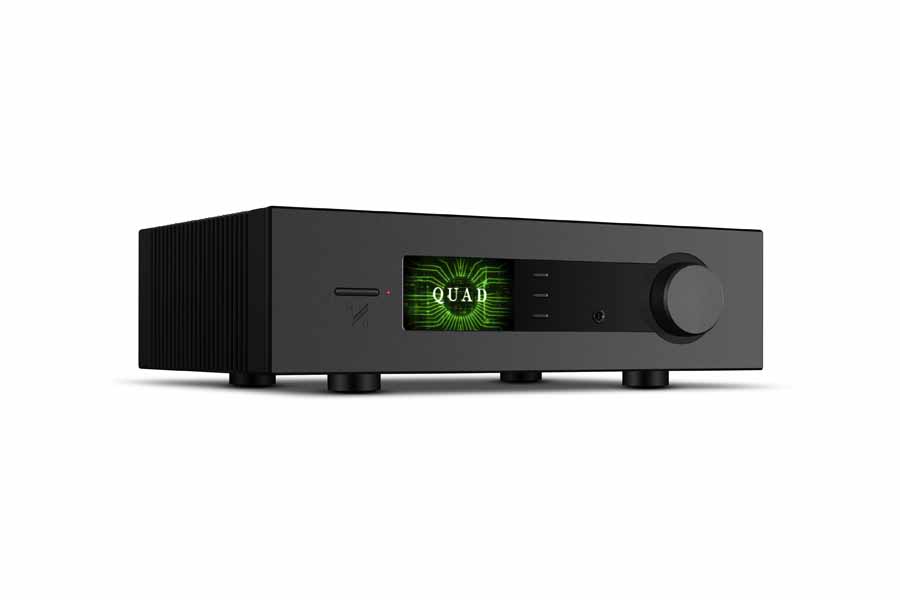
QUIBBLES
There is little to complain about on this excellent amplifier. My own personal preferences would have been the menu button on the remote separate from the random/repeat buttons. Maybe the mute and menu buttons just above the “iPod” wheel.
For £3499 it would also be nice to have BT and a touch screen.
Apart from that, this is a seriously well-engineered product.
CONCLUSION
It might have taken five years for the Platina series, but the Integrated was well worth the wait, and well deserves Five Hearts.
The amplifier was equally detailed and controlled in quiet passages as it was when the roof needed raising.
There is plenty of power here, and the musicality keeps you listening for long periods.
£3499 might seem a lot, and double what a 405+33 bought in 1975 or 405+44 bought in 1982 would have cost, allowing for inflation, but this amplifier is a brave attempt to show just what the bods at Huntingdon can now achieve to bring that great name back into daily discussion.
This is a significantly advanced and masterful product that warrants listening to. Perhaps someone just needs to create a new QUAD tag line. “Even Closer to the Original Sound”, perhaps?
AT A GLANCE

Build Quality and Features:
Excellently crafted machine showing that this is a serious piece of kit
The GUI is easy to navigate, and facilities are useful
Sound Quality:
This is a new QUAD sound, taking them into the 21st century with detail, precision and power for those peaks to keep you listening longer
Value For Money:
Considering the technology and the design of this multi-source amplifier, this is an excellently priced unit
Just bear in mind BT and streaming come as an extra package
We Loved:
Reserves in power for the peaks was good
Excellent navigation system
Fast and detailed presentation
We Didn’t Love So Much:
No touch-sensitive screen
Would like some MC load resistance options
Elevator Pitch Review:
I was a bit curious as to what this new top-of-the-range Platina series would have to offer. Having played with the gold and grey of the retro QUAD 3 and 33/303 combo, I did wonder if it would just be more of the same. I was very wrong. This is faster and more realistic. It is brilliantly designed and comes with a 3-year guarantee. But does this mean the Platina reaches the plateau of QUAD amplification, as the company now celebrates 90 years?
Price: £3499
Janine Elliot
SUPPLIED SPECIFICATIONS
DAC stage: ES9038PRO chipset and bespoke circuitry; optional upsampling and digital filter settings
Phono stage: Ultra-low-noise MM/MC circuit design with adjustable gain (46dB, 52dB, 60dB). MM 50kΩ/100pF, MC 360Ω/200pF loading.
Amp circuitry: Dual-mono Class AB; custom components including capacitors and 630VA toroidal transformer
Power output: 2x 200W (8Ω, THD<1%); 2x 300W (4Ω, THD<1%)
Power amp distortion (THD): <0.0008% (1kHz @ 100W/8Ω)
Signal to Noise Ratio: >110dB (Line and XLR, A-weighted); >78dB MM, >70dB MC (A-weighted)
Maximum current delivery: 2x 20A
Display: 4.3in, 800×480 pixels, full colour IPS LCD; extensive display and menu options
Dimensions (WxHxD): 445×134.5x348mm
Weight: 17.1kg