Authentic Audio Image Vittorioso + Cables
AUTHENTIC AUDIO IMAGE VITTORIOSO + CABLES REVIEW
Authentic Audio Image Vittorioso + cables are the Slovakian brand’s entry-level offering, though they are still a substantial investment. In this review, Debbie Collinson takes a listen to the full range, including interconnects, digital, and speaker cables.
When I accepted this review, I knew it would be an interesting, challenging and possibly controversial choice, given relative cost of the cables compared to my modest system. It was, however, too good an opportunity to resist!
In this review, I will be focusing on the entry-level lineup of Authentic Audio Image (AAI) Vittorioso products, including a variety of interconnects and power supply cables. Whilst this is the entry level range for AAI, they still demand a significant investment, with a starting RRP of £649 for a 0.5m USB, AES or LAN cable, up to £1749 for 1.5m of speaker cable. Full pricing details are supplied at the end of the review.

Authentic Audio Image cables are currently distributed solely by Surrey Audio in the UK and are relatively new to the UK market. They have been awarded various accolades by a well-known high-end audio YouTuber in the US, who, Surrey Audio tells us, has replaced most of his ultra high-end cables with AAI stock, albeit the top of the range Estremo variety, as opposed to the entry level Vittorioso + lineup, which we are exploring and reflecting upon today.
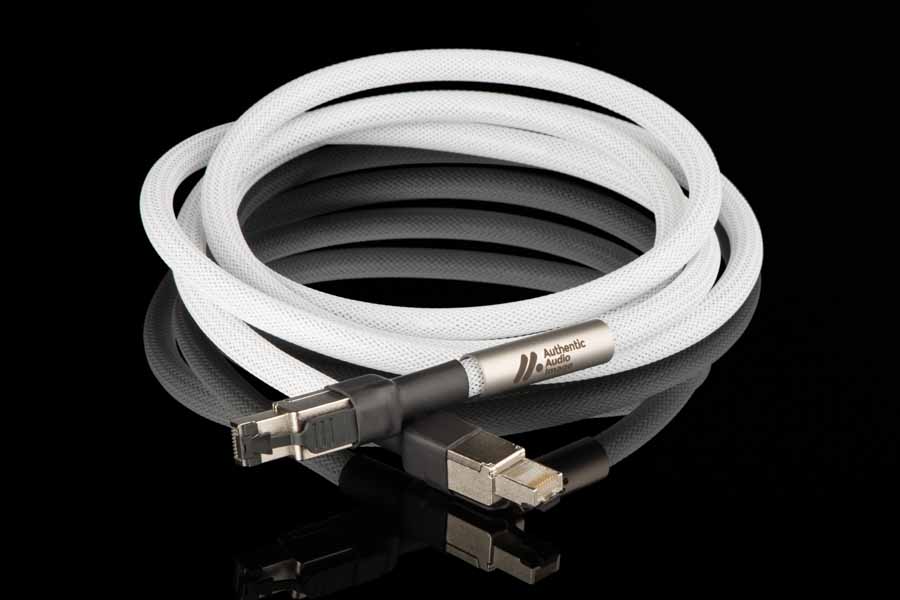
BUILD AND FEATURES OT THE AUTHENTIC AUDIO IMAGE VITTORIOSO + RANGE OF CABLES
Authentic Audio Image are a company based in Slovakia, and they pride themselves on utilising Interference Suppression Technology (IST) to enhance sound quality by modifying the properties of conductors and insulators. They claim this results in a more realistic and detailed audio experience. AAI states that their cables are known for their ability to create spatial rendering that allows listeners to perceive the precise placement of instruments and vocals within the audio image.
Interference Suppression Technology is a new and holistic methodology designed to improve sound quality in high-end audio and recording systems by reducing microscopic distortions caused by electromagnetic and mechanical interference inside materials and components. Authentic Audio Image states that materials like copper and aluminium are not completely uniform at their atomic level; their properties vary with direction (anisotropy), and over time, vibrations, magnetic fields and usage can cause microscopic imbalances in cables and components. This can lead to phase shifts, resonances and electromagnetic interference, which can harm the purity of the audio signal. That’s the claim.










IST treats the whole system (materials, components and electromagnetic fields) as one connected field (hence my holistic comment) and aims to harmonise the energy balance by using resonantly tuned materials, creating electromagnetic balance and arranging components precisely to neutralise microscopic magnetic and electric fields (micropoles), unwanted resonances and frequency instabilities. The result, say the brand, should be a stable, neutral, and interference-free environment for the audio signal.
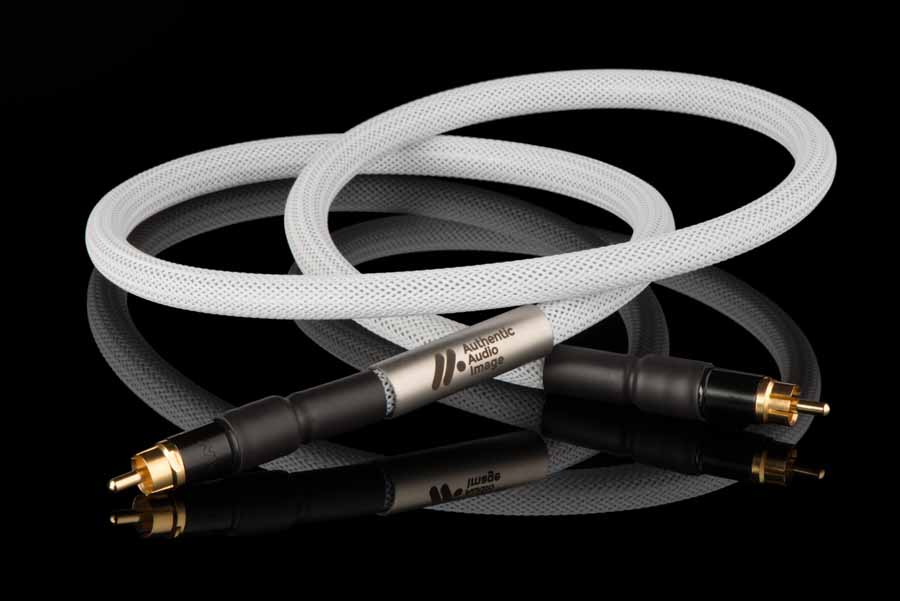
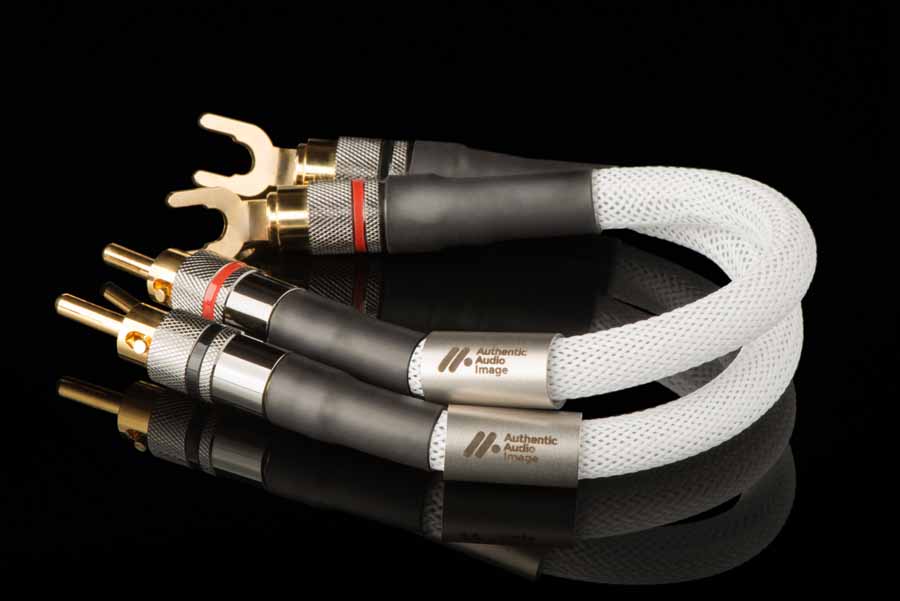
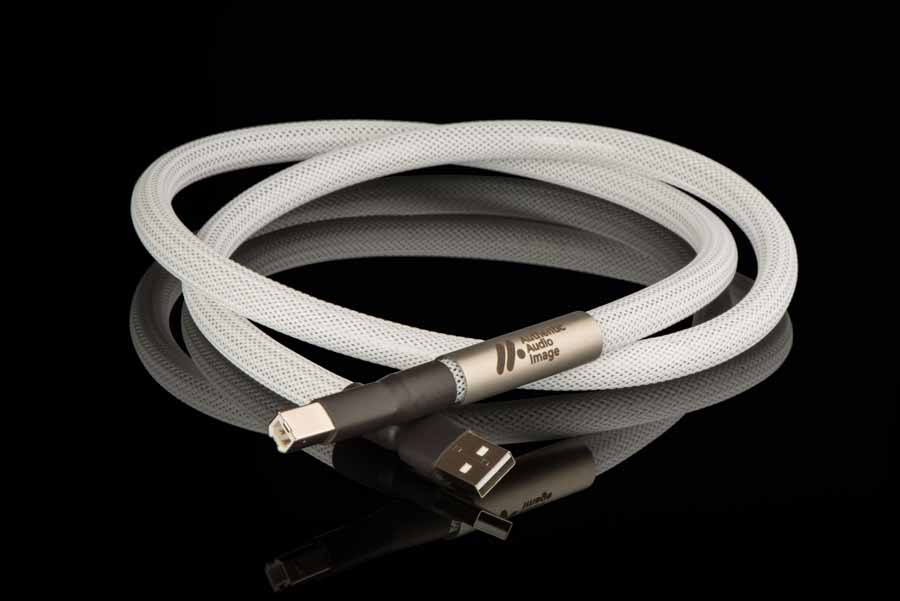
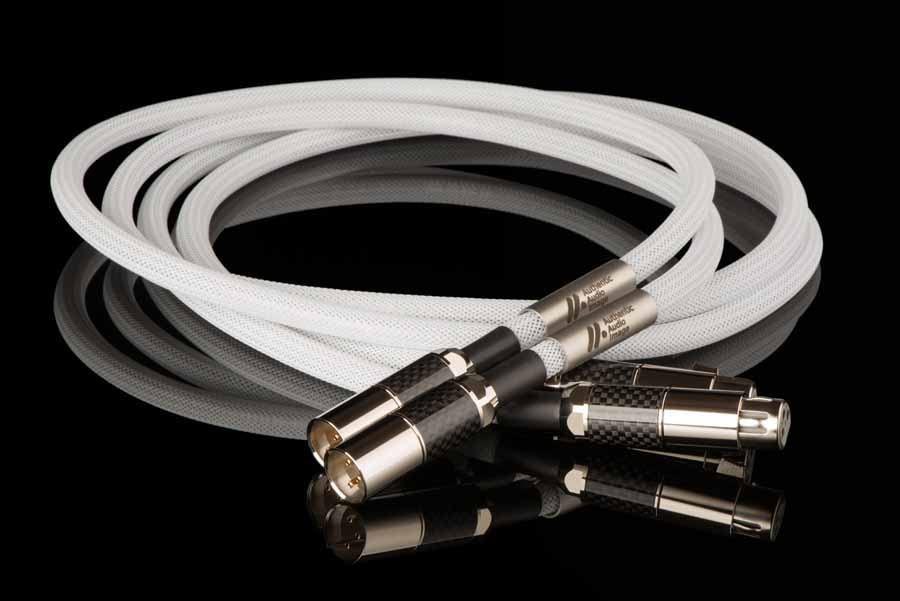
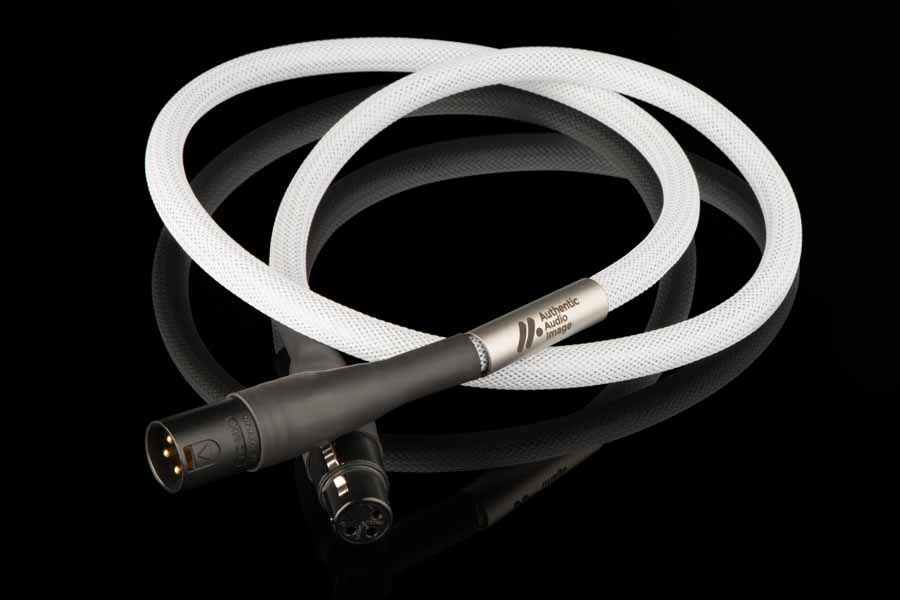
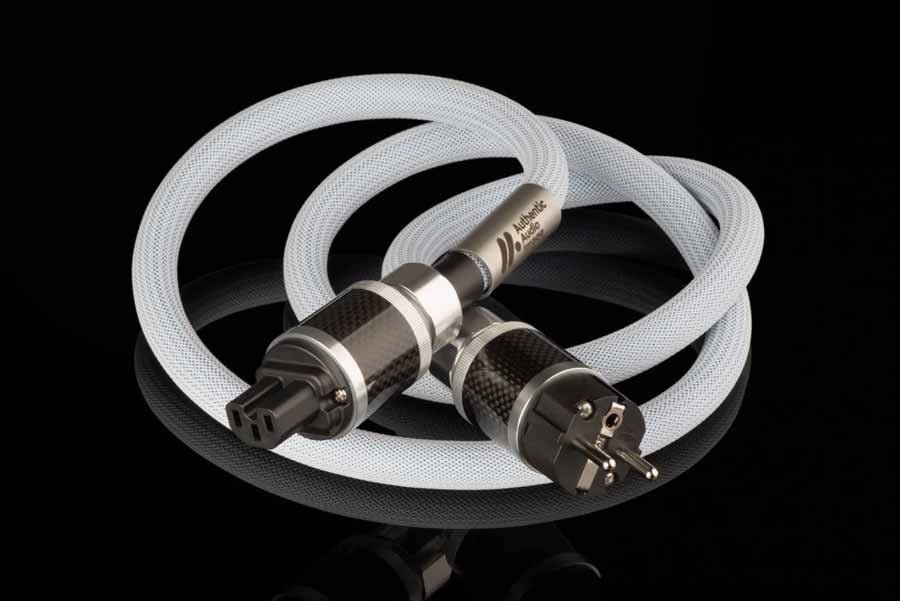
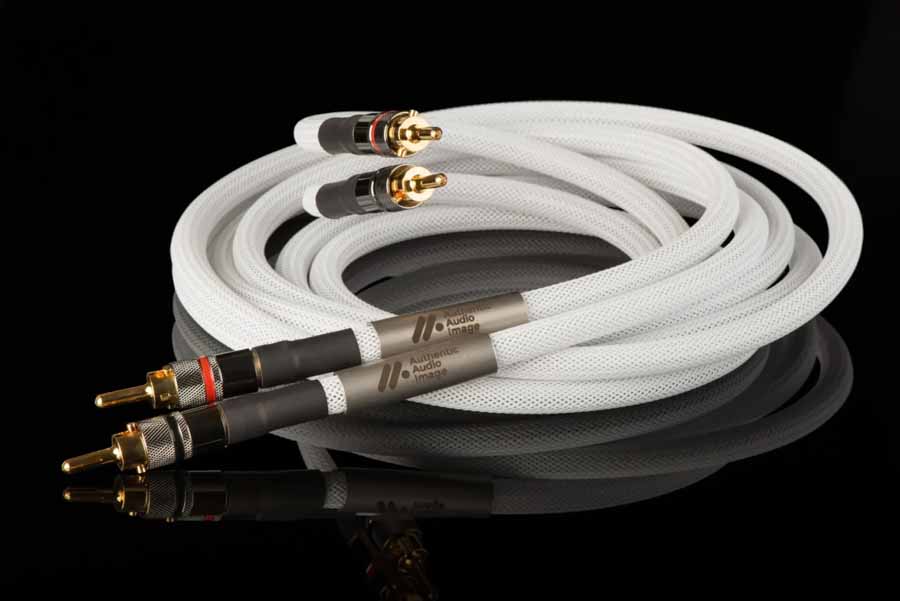
The cables are solidly built and well insulated. The cables in the test selection are white with gold and brown fixings. The speaker cables can be terminated to order with spades and banana plugs as necessary. I am using a combination of both for review purposes.
SETUP AND USE
The cables were relatively easy to set up with one small challenge in that they were far thicker and more robust that my pre-existing Chord Signature, Tellurium Q Black II and Audio Quest Coffee interconnects. This meant that navigating the small spaces behind my system was slightly more challenging as they were not as easy to manoeuvre and required more space due to their rigidity. Once connected there were no issues to contend with in terms of unwanted interference or connections not working as they should. Connections felt secure, tight and of high quality.
For reference, I used these cables on both a passive and an active system, which we will explore later in the review. The main components used were a HiFi Rose RS 150b as the streaming source, a Rega Elicit Mk 5 Amplifier, which was on power, preamp and phono stage duties for my Rega P3 50th Anniversary turntable. The original passive speakers were the new Wharfedale Evo 5.4s, which were swapped halfway through the review for our new Kii Audio Seven active speakers. We were still able to utilise the power supplies and interconnects in the active system by retaining the Elicit Mk5 for phono and as a connection to the HiFi Rose RS50b.
SOUND QUALITY
The first cables I swapped to test were the speaker cables on my Wharfedale Evo 5.4s. I had been running Townsend Isoldas, a highly capable but slightly older pair. Immediately, we noticed a smoothness to the overall sound, with an increase in richness, clarity and detail. Tracks which may have sounded a little fatiguing before, with some rougher digital edges, were beautifully translated into more palatable sounds. For example, Trojan Blue, by Icehouse, from the Album, Primitive Man, can elicit a few treble trigger points in the treble on the Tidal digital version. When played through the Vittorioso + speaker cables, the “wince moments” (not a technical term I know, but one I often use for my rather sensitive lugholes!) disappeared and were replaced with a smooth, well-controlled and expressive high end.
Testing between 65-80db through the HiFi Rose RS150b on Tidal and Qobuz produced some very pleasing results, for example, on Dusty Springfield’s “The Look of Love” (standard 16/44.1 track), the vocals were rich, lush, airy and relaxed but the instrumental elements had enough stand out detail to really make you sit up and want to lean forward into the recording.
One of the last tracks I listened to through the passive system was Lana del Rey’s “West Coast” from the “Ultraviolence” album (24/44 Tidal version). This track sounded utterly gorgeous. It was dark, lush, velvety, insightful, smooth and detailed but also beautifully controlled, as the bass can sometimes overwhelm the other elements of the track. This did not happen when using the Vittorioso + cables.
Part way through this review, the audiophile other half and I were lucky enough to purchase one of our HiFi bucket list items. We added Kii Seven active speakers into our system, which of course added a few complications mid review. We had to remove the speaker cables and work out a way to facilitate the testing of the existing Vittorioso + interconnects through the active speakers. Luckily, with himself working in the AV industry, he knew exactly how we could make this work, by using my trusty Rega Elicit Mk 5 as a hub for the Rose and turntable, so we continued using most of the Vittorioso + cables with the exception of the speaker cables, which had already established themselves as being extremely capable and worthy in the passive system. With the Kiis finally set up, we couldn’t wait!
At one point, I had been so enamoured with the ability of the Kii Sevens to process Tidal Connect so wonderfully that I contemplated selling the Rose RS 150b. With the Vittorioso + in place, however, I developed a new appreciation for the capabilities of the RS150. The Digital Coax, which had previously been an Audioquest Coffee, opened up the sound even more to enhanced detail, yet it added a smoothness again with some of the more harsh digital tracks.
“Raindrops” by Dilba (Tidal 16/44) was presented as ethereal with clear, almost floaty vocals. The sound was precise and elicited beautiful detail in the percussion.
Switching up a notch, “Burning Down the House” by Talking Heads, from their Speaking in Tongues album (Tidal 24/96) was presented with even more spectacular bass control and extension; possibly the best I have yet heard through the Kii Sevens, which is truly saying something! Somehow the cables kept adding an additional element of multi layered separation without losing focus on David Byrne’s distinctive vocals. It was punchier and more complex, compared to the system I had been used to (and already deeply impressed with).
Next came a personal household favourite, “Wrapped Around Your Finger”, The Police, Live from Buenos Aires (Qobuz 16/44). Here, words almost failed me. The track was hypnotising with amazing holographic imaging. Sting’s vocals were forward in the mid-range but not overbearing, and there was a wide, spacious soundstage that filled the entire listening room. The detailed percussion was exquisite, and it sounded as good as I have ever heard it sound on 2-channel test systems, including those in much higher price brackets.
Jeff Buckley’s “Lilac Wine” (Tidal 16/44) was no less breathtaking. The exceptionally rich midrange with Buckley’s emotive vocals were centre stage but juxtaposed with deep bass and pure detail in the percussion. It was an “on the edge of your seat” listen, which left me hanging on to every lyric. The crescendo of the track was cohesively delivered in stunning, complex full range.
At this stage I decided to step up the volume to 80db and switched to the Hot Chip 12” remix of Foals “My Number” (Tidal 16/44), another familiar test track. This was a noticeable change of pace from the previous test tracks. Again, the cables delivered superbly controlled rich bass. You could clearly hear the different sound effects in the mix, such as the use of dripping water alongside the electronic beat. Timing was outstanding and although the track can be on the loud side, particularly 3-4 minutes in, the cables maintained a smooth and unfatiguing presentation without losing any of the dynamics and detail.
There were a couple of tracks that didn’t seem to translate as well to my ears than using the Kii Sevens with Tidal Connect. This could be down to the digital to analogue conversion through the Rose sounding less than optimal compared to the internal DACs in the speakers, but the cables had previously performed so beautifully with other tracks. “Ghosts” by Japan (Tidal 16/44) was notable, because it usually sounds so elegant and detailed. It felt restrained, recessed and slightly flat compared to the same recording on Tidal Connect directly to the speakers. We also played the vinyl version and had no issues with compression. Another track that seemed less than optimal was “Saltwater” by Chicane (16/44 Tidal) where I noticed that the bass was far less well controlled than via Todal connect. The bass drowned the midrange and there were issues with resonance that I did not experience with sending the same track directly to the Kiis via Tidal Connect. Of course there are multiple variables in place, including the room, speaker placement, volume (and of course the variability of my ears!) however the testing was done as a direct comparison with the speaker placement unchanged and the same room acoustic factors.
Despite the couple of track anomalies, these cables acquitted themselves extremely well. They definitely lifted the capabilities of both the passive and active systems and out-performed more mainstream cables of a similar, or slightly lower price range. They added class and smoothness to the majority of tracks played with some spectacular outcomes, making tracks like “Lilac wine” and “Wrapped around your finger” sound even more special and exquisite. If money were no object, I would have no qualms about investing in the AAI Vittorioso + range. They represent serious competition for some of the mainstays in the cable market today.
QUIBBLES
They were not particularly flexible due to their robust build, so required careful positioning in the tight space behind our system.
CONCLUSION
The AAI Vittorioso + range of cables are extremely capable, despite being AAI’s entry level offering, with smooth, detailed, rich, organic sound which was not at all fatiguing. All round superb performance with some outstanding results on live and acoustic tracks.
AT A GLANCE

Build Quality and Features:
All of the Vittorioso + cables are robust and reassuringly well finished
They feel pricier than their RRP suggest
Sound Quality:
Superb sound quality that added extra depth, dimension and class to my listening system, exceeding my expectations of an entry-level range
Value For Money:
Compared to some similarly priced, more mainstream products we have tried, they constitute great value for money for anyone with a mid to high-end system who is looking to invest in superb interconnects and upgrade their power supplies
We Loved:
Their openness and their ability to deliver a beautifully smooth performance without losing any of the detail. Exceptional presentation of percussion in live and acoustic tracks
We Didn’t Love So Much:
Manoeuvrability of some cables was tricky in small spaces as they are relatively robust
Elevator Pitch Review: If you are looking to invest in some serious audiophile quality cables, then don’t exclude this superb entry level offering from Authentic Audio Image. I would highly recommend trialling them in your system if you are looking to maximise the potential of your existing setup. They certainly improved my listening experience in both passive and active systems. The speaker cables are particularly highly recommended for passive speakers.
Price:
Vittorioso RCA Cables from £1238.00 for 0.5m,
Mains Cable from £1695 for 1m or £2137 for 2m,
£649.00 for LAN cable 0.75m,
£649 for Digital COAX 0.75m,
£649 for USB cable 0.75m,
£649 for AES cable 0.75m,
£1299 for XLR cables 0.5m or £1630 for 1m
£1749.00 for Speaker Cables 1.5m. Cables are also available in other lengths as required.

Debbie Collinson